Modular 3D-Printed Desk Organizer: Customizable Solutions for Workshop Efficiency
| Shelf | AI & ML |
|---|---|
| Date in | |
| Readers | 919 |
This modular desk drawer and workshop bin organizer offers versatile storage solutions, designed for easy wall mounting and customization.

This recent release from the DIY community brings forth an efficient modular desk drawer and workshop bin organizer that focuses on flexibility and adaptability for users. Created by donovandyl, this solution enhances workspace organization through a thoughtful design that emphasizes personalization and ease of use.
Modular Design Features
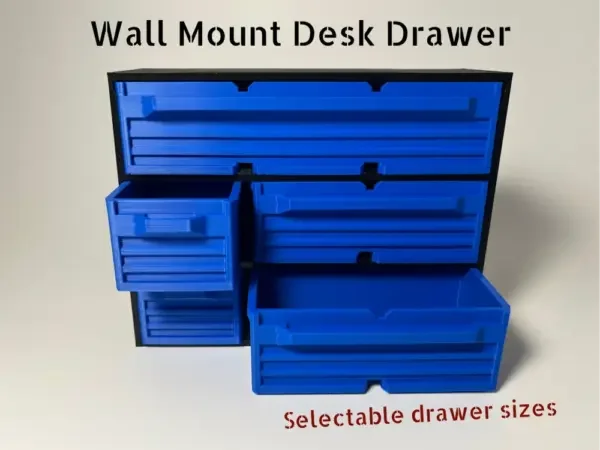
The organizer boasts a frame that can be securely mounted on a wall using screws, or it can easily attach to a standard 1-inch pegboard system. This dual functionality allows users to select their preferred installation method based on workspace layout and personal preference, which can be pivotal when dealing with limited space.
As for its storage capabilities, the organizer accommodates three distinct drawer combinations: nine small drawers, three medium plus three small drawers, or three large drawers. The medium option consists of two small drawers, while the large option is developed from three small drawers, illustrating a clear intent to provide users with ample options for different items and tools.
What stands out here is the availability of both plain and label-front versions of each drawer. The label-front versions come with a designated slot for paper tags, which can significantly enhance the efficiency of finding tools and materials quickly. This feature caters to various users, whether they are looking for a minimalist aesthetic or prefer clear labeling for easier identification.
Specifications and Installation
The dimensions of each unit, including all drawer and wall-mount components, is 11.9 inches in height with a total of seven printed plates, making it a compact solution fit for a range of workshop sizes. The inclusion of options for pegboard frame mounts ensures compatibility with widely-used workspace setups, fostering greater adoption among hobbyists and professionals alike.
In addition, the design provides a pegboard frame variant that includes two or four adapters, further enhancing its versatility. This means that users can rotate and reconfigure the organizers within their workspace, seamlessly adjusting to changing project requirements or personal preferences.
Impact on Workspace Organization
The practical impact of this organizer cannot be overstated. Such modular systems are crucial for maximizing space efficiency, especially in workshops or home offices where clutter can impede productivity. With the ability to customize drawer sizes and types, users can efficiently categorize and store a variety of tools, craft supplies, or administrative documents, thereby creating a productive atmosphere and reducing time wasted searching for items.
Moreover, the 3D printing aspect allows users to download the design files directly from Makerworld, enabling a DIY approach that fits the spirit of the maker community. This not only nurtures creativity but also ensures that the product can evolve based on user feedback and community input, something typical commercial solutions often lack.
Considerations and Future Development
While the design shows promise, potential limitations should be considered. For instance, the structural integrity of the drawers will depend significantly on the material chosen and the printing settings used. Users will need to ensure they have suitable filament that provides adequate strength for daily use. Additionally, the option for purely aesthetic colors and styles may be limited unless users modify the design files themselves or unleash their creativity with paint or other finishing touches.
Another aspect worth considering is the weight capacity of each drawer once assembled. Understanding the stress limits and how various materials can affect longevity would be important for users habitually relying on such organizers for heavier tools. Development teams might want to investigate this in future iterations to enhance usability.
Looking Ahead
As the community continues to embrace 3D printing, projects like this illustrate how DIY culture is pushing the boundaries of organization in practical ways. The ability to modify and adapt designs creates endless possibilities, making this desk drawer and workshop bin organizer not just a product, but a stepping stone towards a more customized workshop experience.
With potential for user-driven updates, the future of this modular organizer could widen the scope of applications. As more users experiment with the design, sharing insights and improvements could lead to iterations that address current limitations and encourage broader adoption. This project serves as an example of how DIY solutions can meet specific user needs, promoting a culture of creativity and independence in workspace organization.


