3D Printed Airless Wheels Enhance Ground Robotics for Critical Missions
| Shelf | AI & ML |
|---|---|
| Date in | |
| Readers | 637 |
Print&Live and iSCALE3D's airless wheels for unmanned ground vehicles improve casualty evacuation and transport efficiency in challenging terrain.
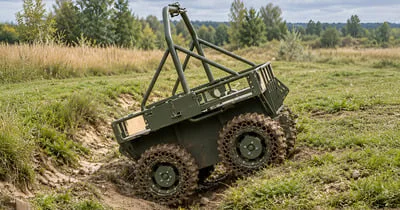
Print&Live and iSCALE3D have introduced a significant advancement in ground robotics with the development of Arkan, a set of 3D printed airless wheels specifically designed for unmanned ground vehicles (UGVs). These wheels are purpose-built for a variety of critical applications, including casualty evacuation, ammunition transport, and logistics in rugged environments.
Design and Materials
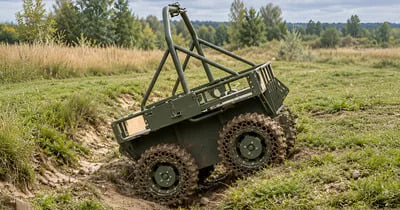
The Arkan wheels feature a unique lattice structure crafted from load-bearing elastomers and polymer composites. This design not only contributes to their structural integrity but also allows for the creation of lightweight components that enhance overall vehicle performance. The lattice structure is engineered to distribute stress evenly throughout the wheel, reducing the likelihood of failures under load. Each wheel is enclosed with sidewalls and sports a rounded tread, effectively preventing mud, stones, and ice from accumulating. This is particularly important in adverse weather conditions, as it ensures that the wheels maintain traction and maneuverability in challenging terrains. This design consideration is crucial when you think about the diverse operating environments UGVs may encounter, from deserts to frozen landscapes.
Weight and Cost Efficiency
One of the standout characteristics of the Arkan wheels is their weight. Each set weighs between 32 kg to 56 kg, which is significantly lighter than the Western airless wheel alternatives, which often range from 88 kg to 144 kg. This reduction in weight offers a practical advantage by improving the vehicle's payload capacity and mobility, allowing UGVs to carry heavier loads or travel longer distances without compromising efficiency. Moreover, the cost efficiency of these wheels sets them apart; priced at approximately €680, they present a substantial saving compared to competing options that typically fall between $3,000 to $4,000. This affordability makes them an attractive choice for military units and organizations working in logistics and transportation where budget constraints are commonplace. The implications here are significant—budget-conscious military operations can allocate resources more effectively, ensuring that more units can be equipped with these advanced wheels.
Performance Enhancements
Beyond weight and cost, the Arkan wheels provide an impressive reduction in rolling resistance, which can amount to a striking increase in overall vehicle range. This factor is crucial for UGVs operating in combat or rescue scenarios, as extended range can be a matter of life and death when transporting injured personnel or critical supplies to remote locations. The engineering behind this increased efficiency is noteworthy in that it employs advanced material science to minimize drag and enhance propulsion. Additionally, the two-piece rim design of the wheels allows for easy tire swaps in the field, enabling swift repairs with minimal tools. This feature is particularly valuable in military environments, where downtime can have significant implications. If you're working in this space, you'll appreciate how vital rapid maintenance can be in the heat of the moment, especially in combat operations where every second counts.
Real-World Testing
The Arkan wheels have undergone extensive field and combat trials with the Ukrainian Defence Forces, illustrating their practical efficacy in real-world scenarios. A test conducted with the TARGAN 3K 244 EVO 1 vehicle demonstrated the wheels' capabilities, covering 210 kilometers on a test range and 151 kilometers across 11 winter combat missions. These missions involved hauling a hefty 1,825 kg of cargo while also facilitating the evacuation of a wounded individual. Remarkably, the wheels continued to function effectively despite noticeable tread wear—a true testament to their durability and reliability. (And this is the part most people overlook). The tireless performance in such grueling conditions highlights not just the design innovation but also the critical importance of reliable logistics in combat. This isn’t merely an advancement in technology; it represents a lifeline in dire situations.
Current Production and Future Prospects
With the successful trials concluded, production of the Arkan wheels has commenced, albeit in small batches tailored for front-line combat units. This phased production approach aims to integrate feedback from ongoing military operations and further refine the design for future iterations. Being agile in production allows the developers to quickly adapt to real-world challenges and make necessary adjustments based on user experiences. As military needs and technological capabilities evolve, we should keep an eye on potential updates and enhancements that may be introduced in subsequent versions. Future technologies could include smarter materials or improved integration with UGV navigation systems, reflecting the ongoing refinement that is typically seen in defense technology.
Implications and Future Outlook
The introduction of 3D printed airless wheels like the Arkan signifies a shift towards more adaptable and efficient UGV solutions. By addressing weight, cost, and performance, these innovations could reshape operational strategies in military logistics and emergency response. The use of 3D printing technology allows for rapid prototyping and customization—attributes that can drastically improve the speed at which new designs can be developed and deployed. What this means for you, whether you’re in defense contracting or emergency services, is that the tools available for mission-critical tasks are likely to improve at an exponential rate. As further feedback from combat units and field trials becomes available, continuous improvements can be expected. The implications of these enhancements extend beyond the battlefield; similar technologies may soon find applications in civilian contexts, such as disaster relief operations and remote logistics. The intersection of military and civilian use cases often leads to accelerated advancements that can benefit broader society.
To dive deeper into the specifics of this innovative technology, visit designboom.com.


