Exploring the Word Clock 2.0: An Advanced Guide to ESP8266 and WS2812B Integration
| Shelf | Security |
|---|---|
| Date in | |
| Readers | 704 |
Discover the enhanced functionality of the Word Clock 2.0 featuring ESP8266 and WS2812B, designed for multilingual support and seamless 3D printing integration.

Word Clock 2.0 Overview
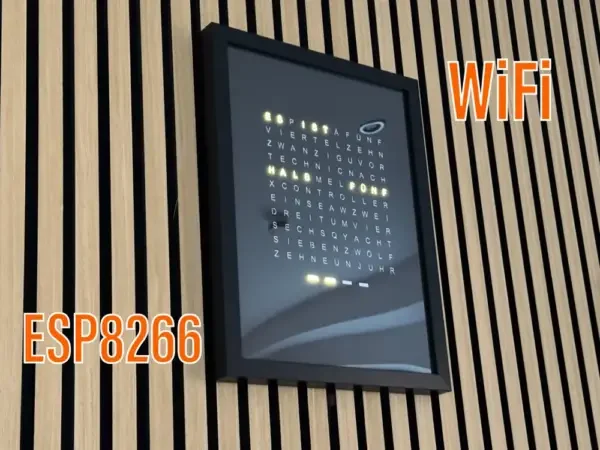
The latest iteration of the Word Clock project leverages the popular ESP8266, paired with WS2812B NeoPixels. Developed by the creator known as didldiprint, this project offers enhanced multilingual capabilities, supporting English, Italian, and German. This makes it not only versatile but also suitable for a diverse user base, reflecting the global nature of DIY electronics. Such efforts point to a significant trend where enthusiasts create solutions that cater to a wider audience, thus fostering inclusivity in technology.
Key Features of the Design
Among the standout features of Word Clock 2.0 is the integration of a TTP223 touch sensor. This sensor provides a hidden activation mechanism; it’s discreetly mounted just above the last character of the first row of letters. That placement enhances user interaction while preserving the clock's visual integrity. Many users might overlook this aspect, but the sensor's design shows a keen understanding of both aesthetics and functionality. The design effort speaks volumes about user experience—something all too often neglected in tech products focused on feature lists rather than actual usability. You want a product that looks good and feels intuitive, and this clock delivers.
3D Printing Specifications
The clock’s frame design is optimized for 3D printing. It uses a recommended 0.28mm layer height, combined with two wall layers and a 15% infill. This setting strikes a balance between sturdiness and material efficiency, a concern for any DIY enthusiast mindful of resource use. The estimated print time hovers around 1.8 hours on a single plate, which is quite efficient, especially for those with limited time for projects. This time frame makes the clock manageable for weekend hobbyists or busy individuals looking for a satisfying hands-on experience without requiring extensive commitments.
Integration with Existing Hardware
This project's architecture is styled to align with the Adafruit ecosystem, a decision that enhances its appeal for users already familiar with or owning Adafruit products. The choice of ESP8266 as the microcontroller opens doors to connected capabilities. It allows for programming, configuration, and future upgrades via firmware changes, which is a beneficial feature for tech enthusiasts who want longevity in their projects. This kind of adaptability means users can iterate on their designs over time, adapting to new needs or technical advancements. It’s a smart move, especially in a tech environment where rapid advancements are the norm.
Assembly and Compatibility
For those interested in constructing this clock, downloadable files are accessible at MakerWorld. This repository includes not just the 3D models needed for printing, but also the coding resources that bridge the hardware and software components. Users will require a basic understanding of microcontrollers and Arduino programming to fully optimize this project. But here's the thing: even if you're a novice, this project serves as a practical learning opportunity, nicely pushing you to deepen your skills while building something tangible and fun.
Practical Considerations
The integration of the light frame, specifically using the IKEA RÖDALM, is far from just an aesthetic choice. It prevents undue pressure on the glass or acrylic front face of the clock. This thoughtful design significantly enhances the project's durability once completed. Additionally, considering aspects like power supply and compatibility with existing home automation systems can elevate the clock’s application within smart homes. Many home automation enthusiasts seek devices that not only perform their primary functions but can also integrate smoothly into their ecosystems. The Word Clock 2.0 meets these expectations.
Looking Ahead: Limitations and Future Enhancements
Despite the new features in this iteration, there are certainly opportunities for further enhancements. For instance, improving battery efficiency could allow for wireless use, making the clock more appealing in areas where power outlets are limited. Also, expanding language support is a logical next step. Custom LED animations would further enhance user interaction. These sorts of improvements would elevate the project beyond its current framework, potentially appealing to both casual users and more serious makers looking for a customizable platform.
Implications and Future Outlook
The Word Clock 2.0 stands at an exciting crossroads between technology and art. It not only demonstrates the possibilities of DIY projects but also sparks a dialogue about the future of interconnected devices. As enthusiasts experiment with adaptations and modifications, we could see the emergence of entirely new applications or environments for such technologies. What this means for you, if you're involved in tech, is an opportunity to shape contributions within the DIY community. The makers pushing boundaries today will inspire the next wave of innovators.
Final Thoughts
The Word Clock 2.0 project exemplifies a growing trend in DIY electronics, blending web-based control interfaces with compelling visual features such as NeoPixels. As the community around such creations continues to expand, we can expect more iterations that blend functionality with aesthetics. Projects like these serve not only practical purposes but also ignite creativity and exploration within the DIY scene. If you're working in this space, this project can be a springboard into further customizations and even fresh innovations stemming from its design.
Engaging in projects like the Word Clock 2.0 invites makers to push their limits. As designers and developers tinker with the base concept, their unique contributions could lead to exciting new possibilities for creation and interaction. Ultimately, the Word Clock 2.0 stands as an engaging intersection of technology and design, showcasing an exciting domain for makers and tech enthusiasts alike. This should encourage more people to participate in the dynamic world of DIY electronics.


