Exploring the Mini Retro TV: An Efficient Video Player Utilizing the ESP32-S3
| Shelf | Security |
|---|---|
| Date in | |
| Readers | 609 |
Tech Talkies developed a compact video player using the ESP32-S3, leveraging innovative techniques for seamless playback from JPEG sequences.
Introduction to the Mini Retro TV
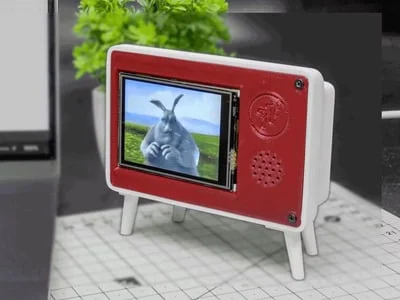
In a fascinating blend of retro design and modern technology, Tech Talkies has introduced the Mini Retro TV, a small video player that incorporates the ESP32-S3 microcontroller. This project, detailed on Hackster.io, showcases not just creativity but also an innovative approach to video playback in a compact form factor. Unlike conventional video playback methods that rely on heavy decoding processes, this project sidesteps common pitfalls of microcontroller limitations.
Technical Specifications and Design
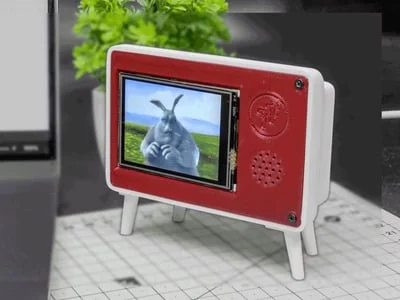
The heart of this miniaturized video player is the MaTouch Lite ESP32-S3 board, paired with a 2.4-inch ST7789 SPI IPS touchscreen. This combination provides a surprisingly robust platform for rendering graphics and video-like experiences. The machining of the device gives it the aesthetic appeal of a traditional television set, invoking a sense of nostalgia for users while packing cutting-edge hardware into a pint-sized package.
Innovative Approach to Video Playback
Decoding H.264 video directly on a microcontroller like the ESP32-S3 can be impractical due to its resource constraints. Recognizing this, Tech Talkies adopted an ingenious workaround. Instead of attempting to decode a video stream in real-time, they convert video files into individual JPEG images beforehand. Each image is resized to match the display resolution, then sequentially stored on a microSD card. During playback, the ESP32-S3 reads these frames in rapid succession and refreshes the screen quickly enough to create a fluid video playback effect.
Performance and Practical Implications
This method of pre-converting video files into JPEGs and keeping them on an external microSD card is significant for a few reasons. First, it avoids the pitfalls of internal flash memory limitations on microcontrollers, which can restrict application capability. Instead, it leverages the relatively expansive storage of the microSD card while the device’s internal flash remains unencumbered. This approach enhances performance and ensures the application can run smoothly without the lag typically associated with real-time video decoding.
User Experience and Future Enhancements
Tech Talkies has made the firmware installation accessible through their Flasher page, lowering the entry barrier for users interested in tinkering with the device. Moving forward, there are plans to introduce additional functionalities: a more user-friendly conversion tool and playback controls will enhance the user experience further. Besides, expanded support for various display resolutions looks to provide flexibility for developers looking to experiment with different screen sizes. Such updates could significantly broaden the application of the Mini Retro TV in the maker community.
Limitations and Considerations
While the Mini Retro TV offers an engaging solution for video playback on a microcontroller, it does come with its limitations. The reliance on JPEGs means that video playback quality is contingent on the quality of the source material and the conversion process. Users seeking high frame rates or resolution may find constraints in the current pipeline process, especially for audio-visual media. Additionally, the project's scope is somewhat limited; enhancements will be needed to enable support for features like touch interactivity and advanced playback options. Such limitations present opportunities for further development and innovation within the project scope.
What’s Next for the Mini Retro TV?
As Tech Talkies continues to evolve the Mini Retro TV, it's worth keeping an eye on its future releases. The increased support for various playback controls and resolution options could turn this proof-of-concept project into a fully-fledged application suitable for a range of personal and educational uses. There's potential here not just for enthusiasts but also for educators aiming to engage students in creative programming and electronics projects.
Conclusion
The Mini Retro TV represents an excellent case study in efficiency and innovation. By leveraging the ESP32-S3’s capabilities in an unconventional manner, Tech Talkies has opened avenues for creative expression and practical applications in microcontroller programming. As further enhancements roll out, this project will likely become a focal point for discussions surrounding resourceful computing and retro aesthetics in modern design.
For more information, visit the original project on Hackster.io.


