ASML Faces Capacity Challenges Amid Soaring AI Chip Demand and Price Adjustments
| Shelf | AI & ML |
|---|---|
| Date in | |
| Readers | 857 |
ASML grapples with unprecedented demand for its chipmaking equipment driven by AI investments, prompting it to boost capacity and raise prices.
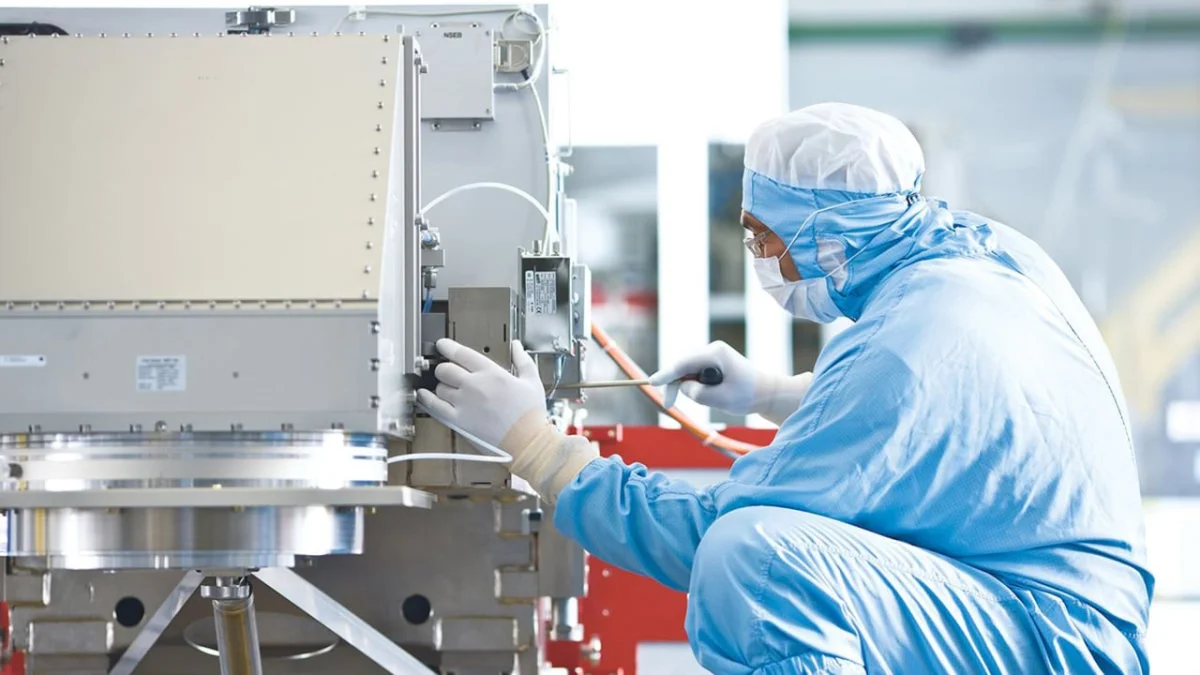
ASML, the Dutch leader in advanced chipmaking tools, is currently under pressure to fulfill a surge in demand driven by the escalating investment into artificial intelligence (AI). According to their Q3 2026 earnings report, which debuted on October 14, the company anticipates customers lining up for orders extending as far as 2029 and 2030. CEO Christophe Fouquet emphasizes that even with ambitious plans to ramp up production capacity by 30% in both 2027 and 2028, the company is likely to struggle to meet this influx of demand.
The financial results underscore this growth, with ASML reporting a net profit of €4.96 billion on sales of €11.7 billion for the quarter. For Q4, ASML projects sales between €14.2 billion and €15.2 billion, leading to an upward revision of its full-year sales forecast from at least €43 billion to a range of €44 to €45 billion. The positive earnings report led to a 2% increase in ASML’s share price, which has climbed nearly 70% so far this year, affirming its position as Europe's largest firm by market capitalization at €586 billion.
Expanding Markets and Customer Base
ASML’s broad customer base, including industry giants like Samsung, Intel, and TSMC—who are heavily invested in logic chip manufacturing—serves as a barometer of ongoing demand. These companies are in a race to expand chip production capabilities, essential to meet the growing needs of AI technologies. For instance, Nvidia's manufacturing is closely tied to TSMC's operations, thus amplifying the need for ASML's lithography machines.
Furthermore, major memory chip manufacturers like SK Hynix and Micron are also embracing expansion plans with ASML technology at their core. Meanwhile, Roger Dassen, ASML's CFO, revealed that the company is exploring the scope of the "Terafab" initiative—a massive semiconductor production project introduced by Elon Musk, which could ultimately lead to millions of logic and memory chips being manufactured. ASML is set to deliver its first Extreme Ultraviolet (EUV) lithography tool to Terafab in mid-2027, though there may be initial delays before operations kick off.
Continued Investment in AI Infrastructure
The AI investment boom shows no signs of abating. Reports indicate that tech behemoths such as Google, Amazon, Microsoft, and Meta plan to collectively spend $725 billion on capital expenditures in 2026—a staggering 77% increase from 2025's record of $410 billion. This sharp rise in spending reflects both the soaring prices of chips and the urgent demand for advanced computing power to support AI technologies.
In terms of specifics, Alphabet has revised its capital expenditure forecast for 2026 from an anticipated $180–190 billion to a higher range of $195–205 billion. Similarly, Amazon's projections have been elevated from $200 billion to $220 billion, and Meta has also raised its capex forecasts. Microsoft acknowledged that nearly $25 billion of its increased budget could be attributed to heightened costs for memory chips, showcasing the ripple effect of AI investments across the chip supply chain.
Market Dynamics and Future Outlook
Amid these burgeoning investments, analysts are forecasting substantial growth within the AI spending landscape. Gartner predicts that global AI expenditures will increase by almost 50% in 2026, reaching $2.7 trillion, followed by a further 36% growth in 2027. This trajectory solidifies ASML’s central role within the semiconductor industry, where their technology enables chipmakers to produce the powerful components necessary for cutting-edge AI applications.
Despite optimistic projections, it's important to note that ASML will need to negotiate some limitations. As the company intends to raise prices starting in 2027—fully manifesting by 2028—there will be implications for customers who might feel the pressure of increasing production costs. Coupled with the tight supply chain dynamics, questions linger about how these price hikes will affect orders and the overall marketplace dynamics.
Conclusion
The balance between demand and supply for advanced chipmaking tools is precarious. With an ever-growing appetite for AI capabilities among tech firms, ASML stands at the forefront of this urgent technological evolution. As they navigate capacity expansions and price adjustments, industry watchers will closely monitor how these factors will shape the semiconductor landscape and influence the competition moving forward.


