Examining the Financial Risks of an AI Market Correction: Insights from the IMF
| Shelf | AI & ML |
|---|---|
| Date in | |
| Readers | 564 |
The IMF warns that a bubble in the AI sector could threaten global financial stability, stressing the risks of high leveraged investments and circular dependencies.
The intersection of artificial intelligence (AI) and finance has raised concerns among investors and economists, particularly regarding the financial health of the broader economy. The latest analysis from the International Monetary Fund (IMF) offers significant insights into these risks, highlighting the fragile state of investments tied to the AI sector and the potential global repercussions of a downturn.
Core Versus Non-Core AI Firms
A key point from the IMF's Global Financial Stability Report is the distinction made between "core" AI firms—those fundamental players in AI development—and non-core entities that might not have the same level of sustainable investment or market resilience. Core firms include technology giants like TSMC, Nvidia, and AMD, along with significant memory producers such as SK hynix and Micron. Their operations are currently thriving, with orders booked years in advance, arguing for a flourishing upstream component to the AI economy.
On the other hand, non-core players—often smaller, less financially robust companies—face more volatile conditions. While theoretically only the investors in these firms would experience losses, the interconnected nature of the AI market means that their failures could still have far-reaching consequences. The report notes that hedge funds have increasingly embraced leverage and margin borrowing, amplifying their exposure to potential downturns associated with a bubble bursting.
The Feedback Mechanism of Investing in AI
Notably, the IMF indicates that the prevalence of leveraged Exchange-Traded Funds (ETFs) is rising, with the proportion of single stocks reaching 28%. Such positions are likely a byproduct of the heightened demand for stocks in the AI and tech sectors. A significant decline in these equities could activate a domino effect, leading to widespread liquidations as ETF managers and lenders react to falling asset values.
Concentration of Investment and Potential Risks
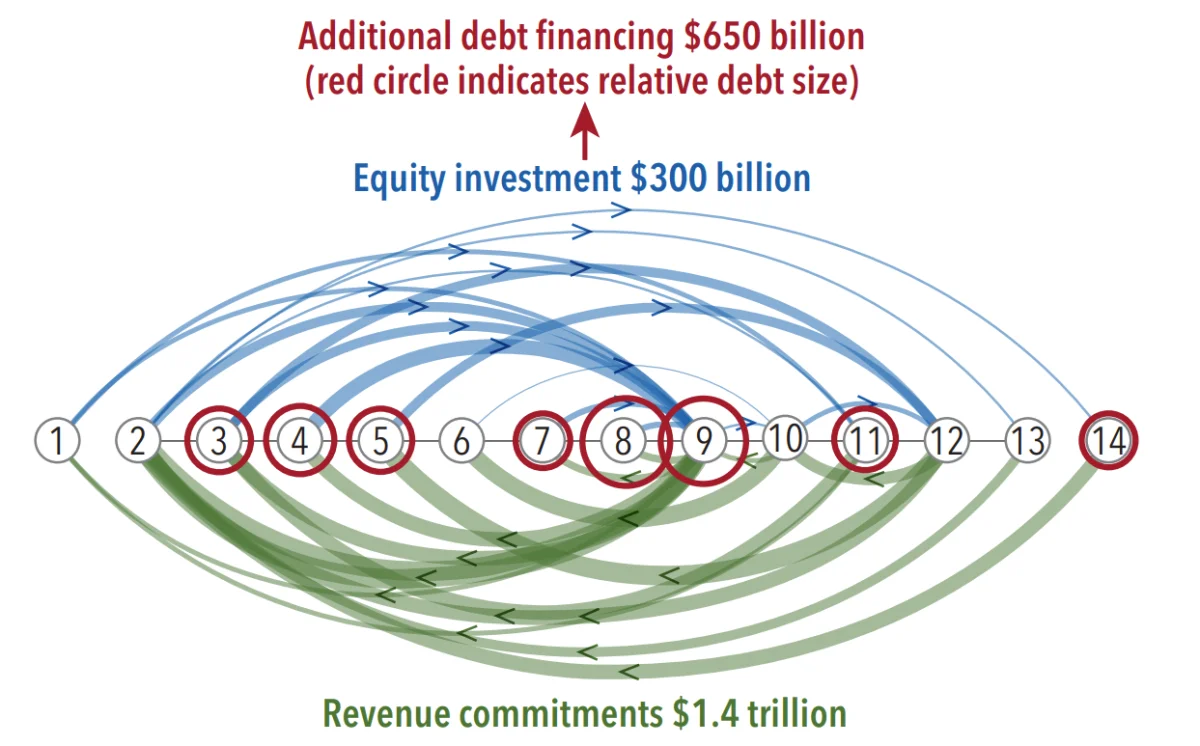
The IMF's examination reveals a staggering concentration of investment within the industry. Since 2023, $300 billion has flowed into financially weaker AI firms, primarily from hyperscalers, alongside $650 billion in debt, resulting in a service and chip revenue of $1.4 trillion. This concentration raises serious concerns: if one or few companies encounter significant challenges, the subsequent fallout could affect the wider ecosystem.
As the report states, AI has emerged as a critical engine for both economic and financial momentum globally. However, with heightened stakes comes increased vulnerability. The ongoing conflicts—in place particularly regarding energy prices—add another layer of uncertainty, complicating both policy measures and investor confidence. Notably, recent global stress tests have indicated that banks maintain a degree of resilience against varied pressures including energy price shocks and prolonged inflation.
The Risks of Over-Dependence on AI Investments
Yet, a potential market correction looms on the horizon, primarily driven by the prospect of diminished AI investment returns or even the premature decline of some AI initiatives. The IMF's projections suggest that global GDP could fall by 0.4% and overall investment by 1.3% by 2028 if current trends continue. Such declines in economic activity underscore the risks tied to AI investments that might not yield expected multitudes of profit or longevity.
Moreover, as hyperscalers have surged to represent 10% of investment-grade bond issuance—up from less than 1% in 2024—their financial structure increasingly relies on debt to support expansive investments in AI infrastructure. This dynamic raises questions about how long investors can sustain their appetite for the mounting debt these companies are incurring to fuel what many see as an ongoing gold rush in the AI arena.
Looking Ahead: Navigating Uncertainty in AI Investments
As we look forward, the voices of caution are clear in the IMF's analysis. While the potential of AI remains alluring, the systemic risks associated with overlapping investments and leveraged positions cannot be overstated. An impending correction, driven by less profitable AI investments and a saturation of financial resources, could have ramifications far beyond the sector. Stakeholders in finance and technology must continuously evaluate their exposure and adapt their strategies to navigate a landscape that could shift more unpredictably than it has in recent years. Understanding these dynamics will be vital for engineers, product managers, and decision-makers as the AI economy continues to evolve.


