Emerging Threats: How Phishing and Remote Management Tools Shape Cybersecurity in Q2 2026
| Shelf | AI & ML |
|---|---|
| Date in | |
| Readers | 367 |
In Q2 2026, phishing escalated to the leading attack vector, while remote management tools like MeshAgent and Zoho Assist were weaponized by cybercriminals, posing significant challenges for organizations.
In the second quarter of 2026, cybersecurity threats evolved, with phishing emerging as the principal method for initial access, appearing in over half of all Cisco Talos Incident Response engagements. This marks a noteworthy increase from approximately one-third in the previous quarter. Attackers have adopted more sophisticated delivery techniques to bypass existing defenses, including using QR code-embedded PDFs that exploit cloud services and relying on compromised Microsoft 365 accounts to propagate attacks.
Authentication abuse also surged, affecting 65 percent of engagements as compared to 35 percent last quarter. Cybercriminals successfully bypassed multi-factor authentication (MFA) through means such as adversary-in-the-middle (AiTM) proxies and session-token theft—demonstrating a significant shift in tactics.
Ransomware Landscape
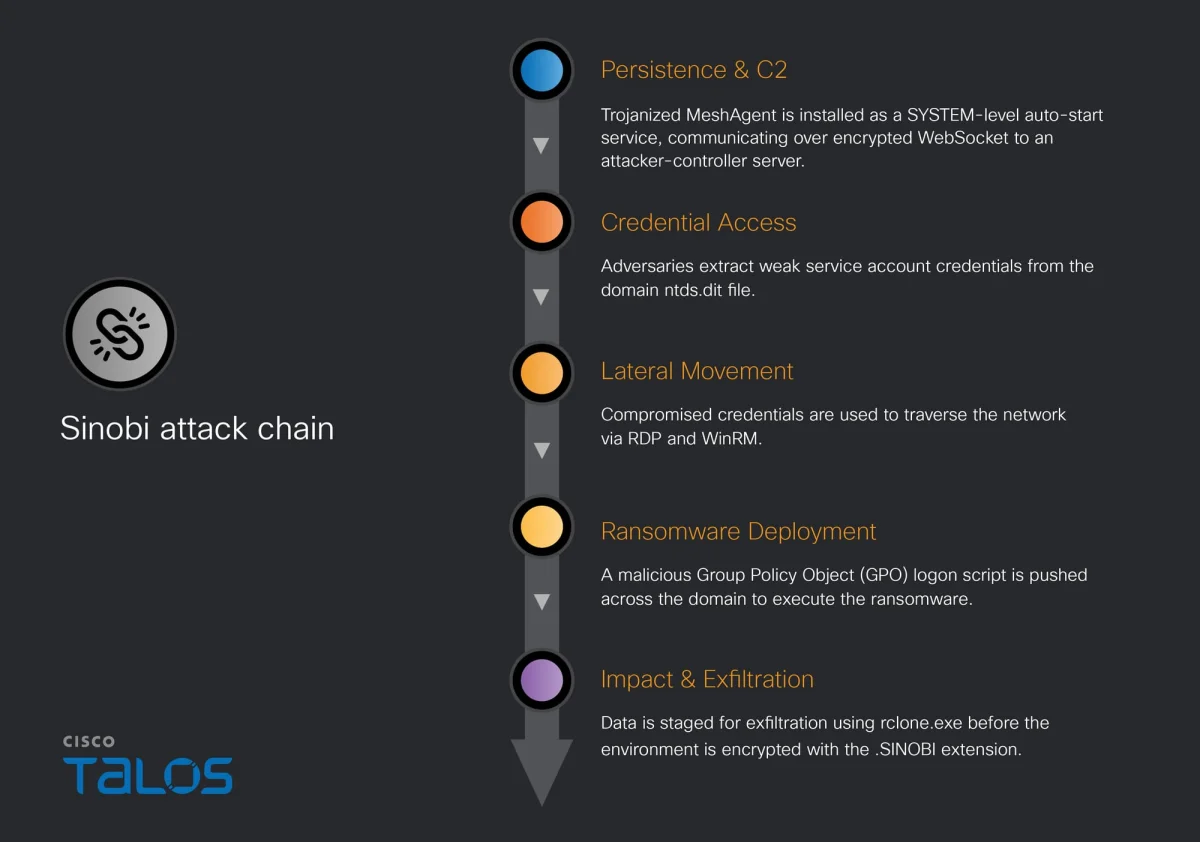
Ransomware incidents accounted for over 20 percent of the engagements this quarter, showing consistency with the previous data of just under 20 percent. Notable among these was the detection of Sinobi ransomware for the first time, as well as previously identified variants Nitrogen and Warlock. Notably, ransomware operators began employing legitimate remote management (RMM) tools, including a trojanized version of MeshAgent and Zoho Assist, to infiltrate networks covertly. This development calls for an emphasis on behavior-based monitoring and strict control over administrative binaries within organizations.
Weaponization of Remote Management Tools
The misuse of remote management tools has become a critical concern. For instance, Sinobi ransomware operators employed a trojanized MeshAgent binary as their command and control (C2) mechanism, which concealed malicious traffic within standard management activities. This technique allowed them to maintain access for several days before deploying ransomware, ultimately leading to the encryption of systems and staged data exfiltration.
Similarly, Warlock ransomware operators utilized Zoho Assist's Unattended Agent, which allows administrative remote control without requiring user interaction. This tactic enhances the odds of successful attacks, as it enables persistent and undetected access to targeted environments.
Innovative Phishing Techniques
Phishing schemes have adapted to exploit trusted infrastructure significantly. A particular campaign observed in Australia employed QR code phishing that targeted Microsoft 365 accounts, using compromised accounts to distribute auto-generated, victim-specific PDFs containing QR codes. These codes directed users to credential-harvesting pages controlled by attackers. If credentials are captured, the adversaries could create email inbox rules, use SharePoint to host malicious documents, and send additional phishing emails to expand their reach.
The campaign, which operated under the actor designation UAT-11764, continues to use internal contact lists to propagate the attack. Defenders are urged to enforce strict policies that either block or flag emails with QR codes and monitor for anomalies in inbox rules and SharePoint file manipulations.
ARRToken Platform: A New Phishing-as-a-Service Threat
Cisco Talos uncovered a new phishing-as-a-service (PhaaS) platform named ARToken, which is associated with the EvilTokens operation. This platform includes over 80 API endpoints enabling device code phishing, email access, and operations related to business email compromise (BEC). Its capabilities provide affiliates with comprehensive post-compromise options, including automated token management and collaborative token sharing, suggesting a heightened sophistication in phishing operations.
The ARToken panel facilitates persistent access through primary refresh tokens, allows manipulation of inbox rules, and utilizes geo-dynamic templates, reinforcing the importance of strict monitoring on authentication methods and enforcing Conditional Access policies to mitigate risks associated with such sophisticated phishing schemes.
Industry Targeting Trends
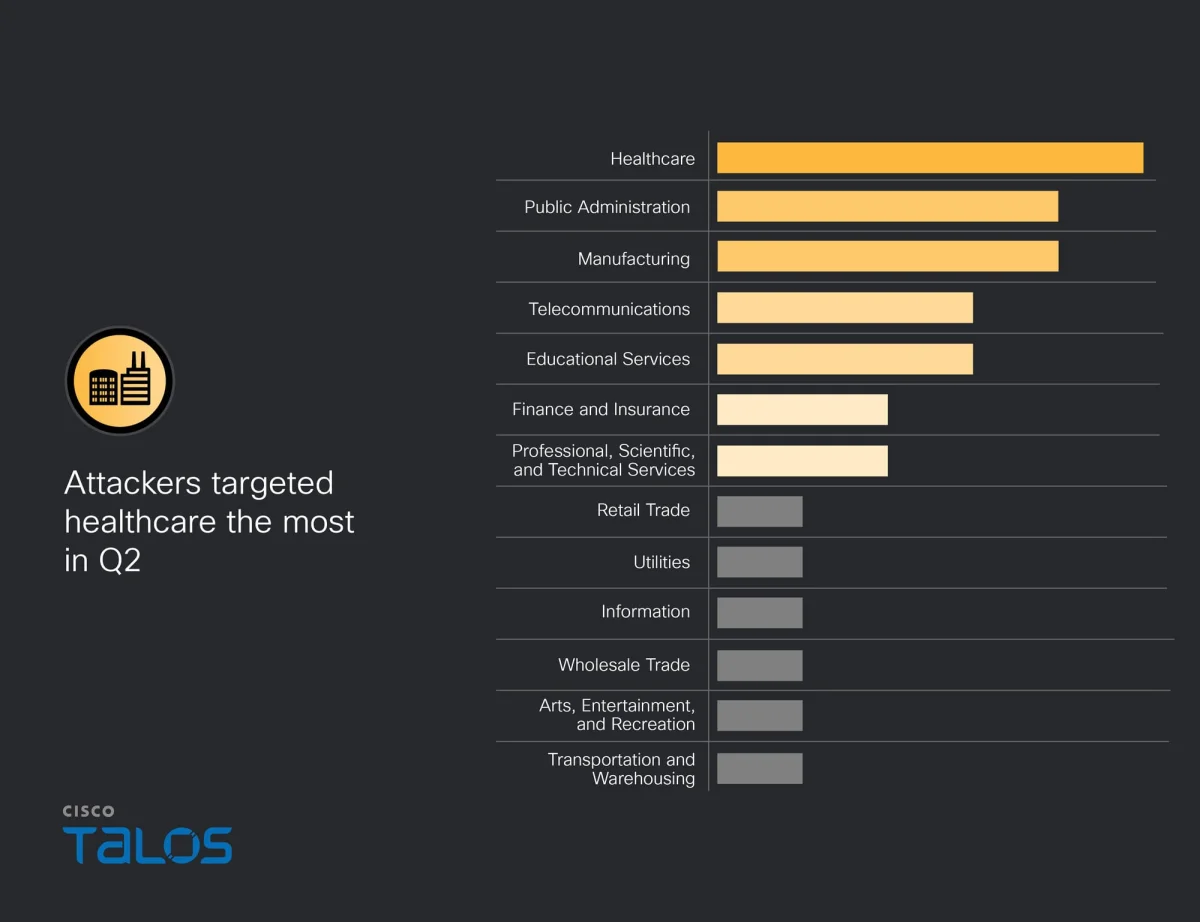
For the second consecutive quarter, the healthcare sector was the most targeted, which accounted for 17 percent of all engagement incidents. Close behind were public administration and manufacturing sectors at 14 percent each. These industries typically face significant downtime constraints, making them appealing targets for cybercriminals. The majority of healthcare attacks targeted organizations crucial to clinical operations, while public organizations provided essential services amid rising cyber threats.
Initial Access Tactics
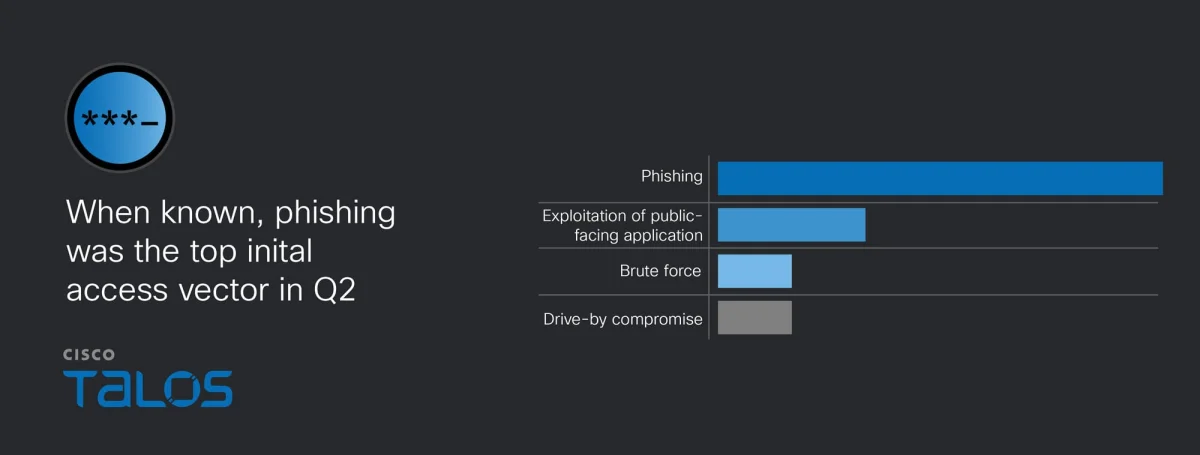
Phishing remains the leading tactic for initial access, accounting for more than half of the engagements this quarter. Alongside phishing, which was characterized by MFA-bypass methods like OAuth device-code phishing, attackers exploited vulnerabilities in public-facing applications and employed drive-by compromise techniques to facilitate entry into targeted networks.
Security Recommendations for Organizations
Implement Comprehensive MFA Solutions
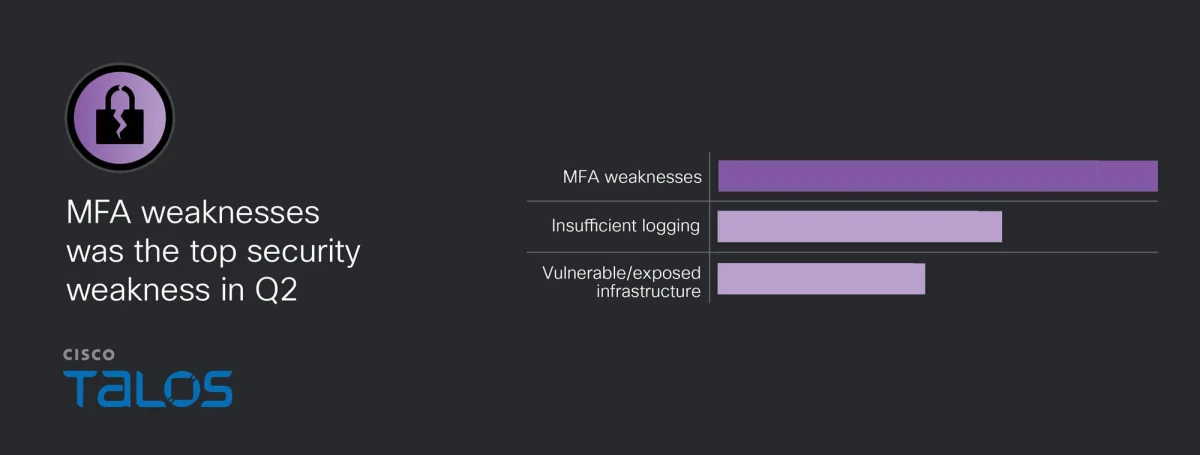
Authentication abuse emerged as the most significant security gap in Q2 2026. To mitigate risks, organizations are advised to transition from conventional MFA methods such as SMS to more phishing-resistant alternatives like FIDO2/WebAuthn and hardware security keys. It is essential to tighten authentication controls, including restricting self-service MFA enrollment and blocking legacy authentication methods through Conditional Access policies.
Enhance Logging and Visibility Measures
Insufficient logging caused notable issues in engagements, with 42 percent reporting challenges due to inadequate visibility across environments. Organizations should adopt centralized logging solutions capable of retaining logs for at least 90 days, facilitating thorough incident analysis and response capabilities. This includes auditing API calls from cloud identity providers and ensuring log data survives tampering and infrastructure changes.
Patching and Exposure Management
The exposure of unpatched vulnerabilities was another common weakness observed, accounting for 31 percent of incidents. Regular patch management and accessibility assessments should be prioritized, with particular attention to isolating or updating end-of-life systems and implementing a vulnerability management protocol that expedites the identification and remediation of weaknesses.
Limit Outbound Email Propagation
Unlimited outbound email thresholds enabled threat actors to extend attack chains significantly. Organizations should consider rate-limiting outbound email activities to help contain compromises effectively, thereby mitigating the potential impact of single incidents that escalate into widespread attacks.
Key MITRE ATT&CK Techniques Observed
In analyzing the tactics and techniques employed by adversaries in Q2 2026, several key findings emerged: the most frequent technique observed for persistence was email hiding rules, while internal spear phishing was the primary method for lateral movement. The abuse of valid accounts for privilege escalation remained a recurring theme, underscoring the importance of identity protection within cybersecurity frameworks.
|
**Tactic** |
**Technique** |
**Example** |
|
Reconnaissance (TA0043) |
T1598 Phishing for Information |
Adversaries may send phishing messages to elicit sensitive information. |
The ongoing evolution of cybersecurity threats necessitates heightened vigilance and adaptive strategies from organizations. By understanding the changing landscape and deploying recommended defense mechanisms, organizations can enhance their resilience against these emerging threats.


