BEC Attacks Rise Sharply as MFA Weaknesses Persist in Latest Talos IR Report
| Shelf | AI & ML |
|---|---|
| Date in | |
| Readers | 824 |
Cisco Talos reports a significant surge in business email compromise (BEC) attacks and ongoing vulnerabilities in multi-factor authentication (MFA) in Q1 2024.
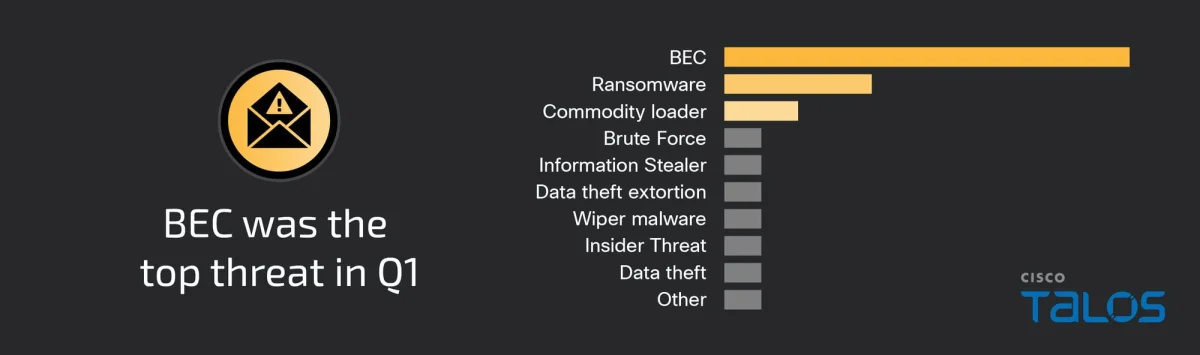
The latest findings from the Cisco Talos Incident Response team highlight an alarming trend regarding cyber threats in the first quarter of 2024. Business email compromise (BEC) emerged as the top concern, dominating nearly half of all engagements—a steep increase compared to previous months. This trend underscores the evolving landscape of cyber threats, particularly in how adversaries exploit established communication channels for nefarious purposes.
Significant Increase in BEC Incidents
Business email compromise, which entails adversaries impersonating a trusted source to deceive victims into transferring sensitive information or funds, accounted for a staggering percentage of reports. Specifically, it represented nearly 50% of the total incidents handled by Talos IR, doubling the figures from the preceding quarter.
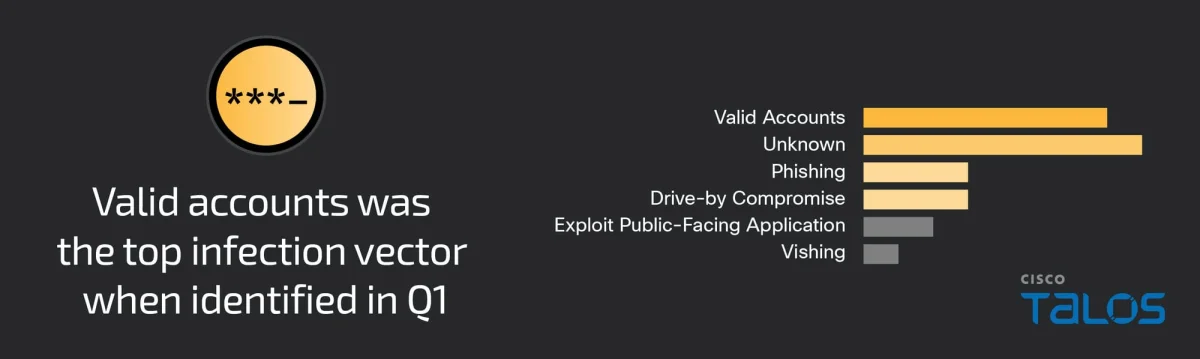
Frequently, attackers employed compromised credentials from valid accounts, which led to over 29% of initial access points. This reliance on valid accounts further emphasizes the need for organizations to fortify their security protocols, especially in BEC scenarios where even minor lapses can yield significant vulnerabilities.
The Persistent Threat of MFA Weaknesses
The report identified that weaknesses in multi-factor authentication (MFA) show no signs of abating. Nearly half of the engagements revealed vulnerabilities, with users frequently accepting unauthorized MFA push notifications—this represents a dangerous trend since 25% of engagements involved such lapses. Despite organizations implementing MFA, these oversights can still compromise access and security integrity.
MFA was initially designed to bolster security against unauthorized access, yet its implementation can falter if users fail to recognize dubious notifications. To counteract these weaknesses, Talos IR recommends enhancing user awareness and deploying more guidelines on handling push notifications, possibly incorporating number-matching methods in MFA systems as an added security measure.
Ransomware Engagements Decrease
Interestingly, ransomware incidents observed a slight decline, comprising 17% of total engagements—an 11% drop relative to the previous reporting period. Among ransomware families, new variants of Akira and Phobos were assessed for the first time. While the overall reduction may suggest improved defenses in some sectors, the emergent variants remind organizations to remain vigilant.
Examination of New Ransomware Variants
Akira Ransomware
Talos IR engaged with Akira in Q1 2024, tracing both an ESXi variant dubbed "Akira_v2" and a Windows-based variant named "Megazord." What sets these variants apart is their development in Rust, deviating from the previous reliance on C++ and Crypto++ languages. This strategic pivot may indicate a growing sophistication in the execution of ransomware attacks. Notably, the initial access method remains challenging to pinpoint due to the multi-staged nature of these attacks.
Once inside targeted environments, adversaries utilized advanced methods to collect sensitive credentials, employing tools to halt security measures in preparation for encryption. Akira continues to operate under a ransomware-as-a-service model, capitalizing on vulnerabilities within small to medium enterprises across several countries.
Phobos Ransomware
Talos IR also monitored activity from the "BackMyData" variant of Phobos. This identifier serves to illustrate the continued commitment of adversaries to leverage established hacking tools like Mimikatz. The exploitation of Active Directory through credential dumping has become commonplace, as have maneuvers designed to ensure ongoing access via remote desktop configurations.
Phobos shares characteristics with the infamous Crysis and Dharma ransomware families but is notable for its various affiliated operations. Prominent among these engagements is the modified utilization of legitimate administrative tools, which can mask the attacks' severity and extend their duration within networks.
Targeted Sectors and Industrial Impact
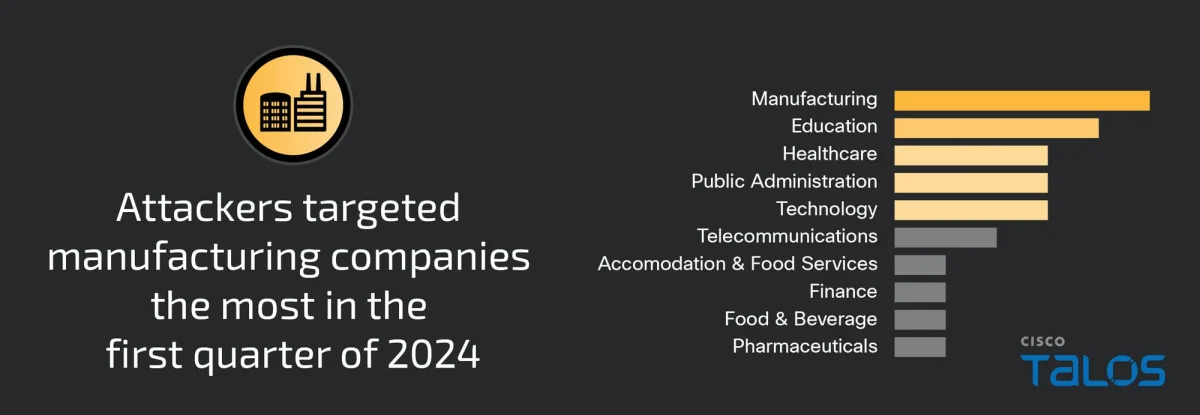
In terms of sector-specific threats, manufacturing and education top the list of targeted industries, continuing the trend from Q4 2023. Notably, manufacturing saw a sharp 20% increase in engagements. Given its operational requirements, the manufacturing realm is often particularly sensitive to disruptions, which adversaries exploit to their advantage.
The range of attacks in manufacturing spans from BEC to ransomware and brute-force access attempts, particularly against VPN infrastructures. The shift in attack vectors toward compromised credentials indicates an evolving strategy focused on previously weak points within security frameworks.
Initial Access Vectors
As previously mentioned, compromised credentials remain the predominant means by which adversaries gain access. This method highlights persistent weaknesses within organizational systems. Organizations must maintain a robust posture, prioritizing regular audits and penetrative testing to detect these vulnerabilities before they're exploited.
Emerging Patterns and Recommendations
The data from Talos IR indicates a requirement for organizations to reevaluate their cybersecurity frameworks, particularly as attackers refine their strategies. MFA weaknesses must be timely addressed, ensuring users are not overwhelmed by notifications. Training and awareness can play essential roles in mitigating risks associated with human oversight.
Organizations should also look at hybrid approaches for authentication methods, blending both traditional and adaptive risk-based methods of authentication to enhance system resilience. Automated alerts for suspicious activities could serve to swiftly inform security personnel about potential breaches, bolstering response capabilities.
Conclusion: Continuous Vigilance Required
Amid these findings, computer and network security professionals are challenged to stay ahead of emerging threats. As Cisco Talos points out through their report, this quarter has revealed concerning trends that underscore the need for investment in comprehensive security practices. Maintaining continuous education for employees, enhancing technical defenses, and regularly updating systems stand as critical strategies for combating these persistent and sophisticated attacks.
Ultimately, as cyber threats evolve, the capabilities of organizations will need to match in pace. Regular assessments of incident response protocols and proactive adaptations to changing landscapes will go a long way in securing valuable assets against threats like BEC and ransomware.


