Russian Chipmakers Showcase RISC-V and Arm Innovations with Retro Gaming at ME26
| Shelf | AI & ML |
|---|---|
| Date in | |
| Readers | 727 |
Russian chipmakers unveiled new RISC-V and Arm designs at the ME26 forum, demonstrating their capabilities through retro gaming applications.
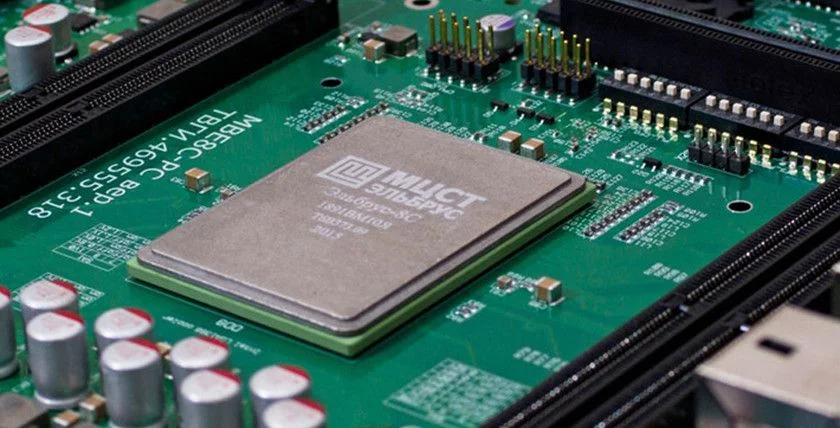
Amid international sanctions, Russia's microelectronics landscape continues to evolve with homegrown chip designs rooted in Arm, RISC-V, and the Elbrus architecture. At the Microelectronics 26 (ME26) forum in Sochi, the latest innovations were publicly showcased, leveraging a nostalgic retro gaming theme to display their capabilities. This event highlighted not just technological advancements but also the ongoing resilience of the Russian tech sector despite geopolitical challenges.
Key Innovations on Display
Among the featured technologies, the Baikal Electronics BE-U1000 microcontroller drew significant attention. This chip, built upon three CloudBear cores (32-bit RISC-V), includes two BR-350 cores running at 200 MHz and a single BM-310 core at 100 MHz. While its specifications may seem modest, particularly with only 256 KB of flash memory and 192 KB of SRAM, its architecture is purposefully streamlined for embedded applications in fields like robotics, IoT, automation, and sensor networks—areas where efficiency is paramount. The drive toward lightweight solutions reflects broader global trends in microcontroller design, where smaller, energy-efficient components continue to gain traction.
The BE-U1000 was showcased in a compact console modeled after the classic NES, dubbed "Ushka." This console was running Chip 'n Dale: Rescue Rangers, illustrating the chip's capacity to handle retro gaming applications while also signaling its potential in education and entertainment. This setup not only evokes a sense of nostalgia but also emphasizes the chip's suitability for diverse applications—not just for gaming but also as a learning tool in tech education. A well-designed educational interface could encourage young programmers to engage with hardware and software development, potentially cultivating the next generation of tech enthusiasts.
Versatility of the Elvis Hypercom-U
Next, the Elvis Hypercom-U emerged as another notable SoC featuring four Arm Cortex-A53 cores clocked up to 1.2 GHz. Additionally, it offers dual ELcore-50 DSPs and a PowerVR GE8300 GPU, providing a solid foundation for multimedia applications. With support for up to 8 GB of LPDDR4, USB 3.0, Gigabit Ethernet, and HDMI output, the Hypercom-U is positioned well for smart cameras and multimedia devices. During the forum, it ran the iconic game Super Mario, showcasing its performance in a multimedia context. This demonstration wasn't just for show; it illustrated the chip's capability in handling graphics and processing tasks, a crucial aspect for any multimedia application.
Exploring the Elbrus Architecture
The Elbrus architecture, another significant development in Russia's chip design, was also represented. While details on specific models showcased at ME26 were sparse, it is widely known that Elbrus chips are engineered for high-performance computing, including desktop and server applications. The Elbrus-16S, for example, can handle 16 cores up to 2 GHz, manufactured on a 16 nm process with over 12 billion transistors. Prototypes in the dual-processor configuration are capable of supporting a whopping 2 TB of RAM, making it a powerhouse for data-intensive tasks. This performance is significant not merely in raw numbers; its implications could influence sectors like cloud computing and big data analytics—fields that rely heavily on processing power for efficiency and speed.
Another chip likely on display was the Elbrus-2S3, aimed at mini-PCs and laptops. Previous reports have highlighted this model's capabilities, including 8 GB of RAM and SSD support up to 480 GB. Operating at 2 GHz, it can deliver 196 GFLOPS, marking it as a strong contender in small form-factor computing. (And this is the part most people overlook.) Despite its relatively high power consumption, which could limit its appeal in energy-sensitive markets, its performance specs indicate potential in compact computing solutions where space and energy costs often collide in their applications.
Implications for the Future
These developments are not merely technological showcases; they represent a broader strategy within Russia to reduce reliance on Western components, particularly in critical sectors. The showcased RISC-V and Arm architectures could signify a shift toward self-sufficiency in the tech field, particularly as other nations grapple with similar geopolitical issues.
However, challenges remain. The transition to these new hardware architectures will necessitate significant changes in software ecosystems and integration processes. Existing software may not be optimized for the new architectures, meaning software developers will face an uphill battle. Additionally, the performance of these processors in practical, real-world applications is still in question as they carve their path in the competitive landscape dominated by established Western technologies. If you're working in this space, considering how these barriers can be overcome may be just as vital as tracking hardware advancements.
That said, the ME26 forum marked a watershed moment for Russian chipmakers, showcasing both creativity and technical prowess. It will be essential to monitor how quickly these technologies can be commercialized and adopted, especially as Russia navigates the global tech ecosystem with unique pressures and constraints. If the Russian tech sector can successfully commercialize these innovations, they could potentially set new standards in certain categories of devices.
The Road Ahead: What This Means for the Tech Ecosystem
As the demand for localized solutions intensifies, the evolution of these homegrown semiconductors might change the narrative within the Russian tech industry and influence global chipmaking ultimately. What this means for you is that as geopolitical tensions shape the tech industry's future, alternative sourcing strategies like those being pursued by Russia could lead to increased competition. This could drive established players to innovate further or pivot, which may benefit end consumers in the long run. However, the key will be ensuring that these innovations translate into reliable, high-performance products that meet industry standards and consumer expectations.


