Examining DLSS 5's Limitations Through Quake: A Modder's Perspective
| Shelf | AI & ML |
|---|---|
| Date in | |
| Readers | 549 |
A recent effort to integrate DLSS 5 into the classic game Quake reveals its limitations when not natively supported, despite impressive upscaling claims.
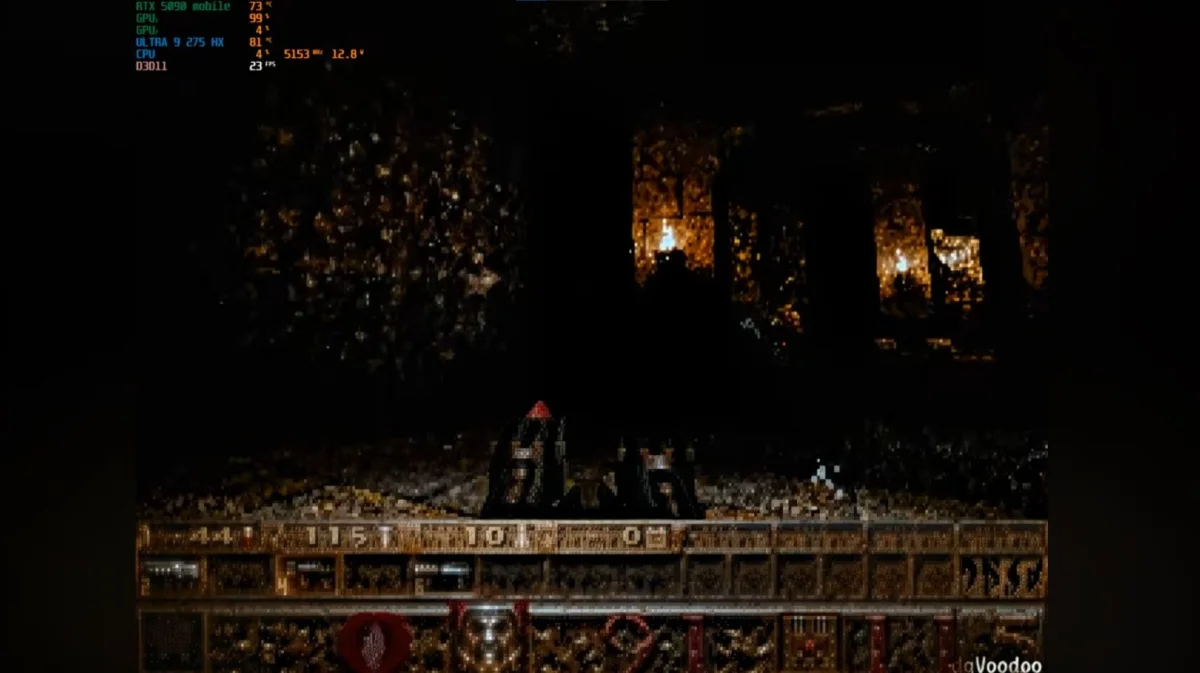
A Ukrainian modder, Valery Kryzhanovsky, is pushing the boundaries of DLSS 5 by experimenting with its application on the original Quake. This is intriguing as it highlights both the potential and the inherent limitations of the technology when used outside native integrations. Kryzhanovsky’s approach involves running DLSS 5 as a post-process effect, specifically utilizing a 4x Multipass method to enhance the visuals. However, the results fall short of expectations.
Kryzhanovsky has a track record of applying DLSS 5 to various games that were never designed for such advanced upscaling techniques, including 2D classics like Duke Nukem and Pac-Man, generating some surreal visual effects in the process. This time, however, Kryzhanovsky's focus is on the 1996 iteration of Quake, widely recognized as a landmark in the history of first-person shooters.
Technical Details and Execution
The implementation leverages ReShade and RenoDX to inject DLSS 5 effects into the game’s frames, effectively applying an AI-driven filter over an emulated version of Quake running through DOSBox. This setup circumvents the need for native engine integration, which is significant since DLSS works best when directly baked into the game's architecture. Despite the imaginative effort, the outcome is not visually appealing, as the upscaled graphics are excessively dark and lack clarity.
Kryzhanovsky notes that the DLSS 5 build being utilized is an early leak, which he describes as "undertrained." This implies that the model may not have fully adapted to the spatial nuances of a 3D environment like Quake. Unlike Kryzhanovsky's previous projects with 2D games, where the limited design left much to the interpretation of the upscaler, the 3D aspects of Quake should theoretically provide a richer dataset for successful enhancement. Instead, the lack of light sources, such as torches, could be contributing to the subpar results, leading to an excessively dark visual presentation.
Historical Context and Comparisons
Before DLSS became a part of the gaming vernacular, Nvidia showcased an RTX demo using Quake II with ray tracing to illustrate advanced lighting effects that had a significant visual impact. This demo set a high standard, showing just how much visual fidelity could be elevated with modern technology. However, it’s vital to distinguish ray tracing from the purpose of DLSS, which is upscaling and primarily designed for RTX cores. In cases like this one, where the implementation isn't matched with the game’s engine capabilities, it highlights the deficiencies in such experimental applications.
For context, integrated technologies tend to yield significantly better results. For instance, the work done by Sultim Tsyrendashiev to incorporate ray tracing into the Quake engine has set a precedent for enhanced graphical fidelity. If DLSS 5 were to be natively integrated into further updates or iterations of Quake, we might see improved results aligning more closely with the expectations set by Nvidia’s demonstrations. This comparison brings forth an essential question: how much better could these classic titles look with technology designed for their specific architecture?
Future Improvements and Considerations
Adding to the discussion around DLSS technology, Nvidia announced a significant performance boost to its DLSS 5 model, claiming a twofold increase in performance while reducing its VRAM footprint by 24%. This performance enhancement could transform how developers integrate DLSS into their projects. Theoretical improvements in performance could open the door for older titles like Quake to experience smoother frame rates and better graphics. But the real challenge remains: can these advancements effectively translate into integration with existing and older game engines?
As Kryzhanovsky continues to explore the boundaries of what’s possible with DLSS 5, the limitations highlighted through this current experiment with Quake serve as a reminder of the importance of engine integration for such technologies. Quake was revolutionary in its time, but now seems to be a litmus test for modern enhancements. This is more significant than it looks, as it sets a precedence for how retro games could be revitalized. If you're working in this space, you'll need to seriously consider how modern techniques can or can't be applied to older titles. Potential improvements in DLSS and similar technologies will grow, but until full engine compatibility exists, results may widely vary.
Implications and Future Outlook
As gaming technology advances, the implications of these experiments could extend beyond nostalgic experiences. They might influence how developers approach remasters and reboots of classic titles. If enthusiasts like Kryzhanovsky can demonstrate what might be possible with improved integrations, mainstream developers may begin to invest more heavily in reviving classic games with advanced graphics techniques. The ongoing dialogue around performance, visual fidelity, and player experience will shape this endeavor.
This tension between old and new — where nostalgia collides with the thirst for innovation — could redefine how games are developed and played. Ultimately, the success of DLSS 5 and its integration with classic engines will expose not only technical limitations but also the appetite for immersive gaming experiences that honor legacy while pushing boundaries.


