CXMT's Upcoming 4F² DDR5 RDIMM: A Closer Look at Expectations and Industry Context
| Shelf | AI & ML |
|---|---|
| Date in | |
| Readers | 501 |
CXMT plans to launch its first 4F² DDR5 RDIMM by year-end, but uncertainties remain around capacity and performance amid a competitive landscape.
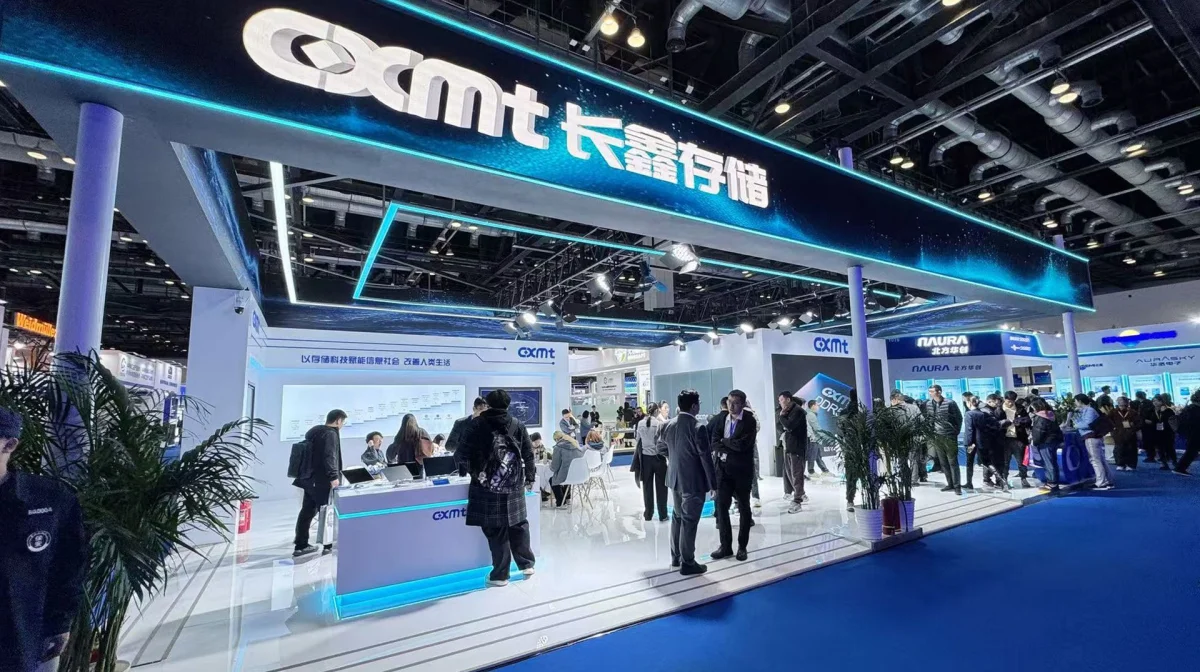
CXMT, China's leading DRAM manufacturer, is set to debut its first 4F² product, a DDR5 RDIMM, by the end of this year, as announced by company president Cao Kanyu. This launch is part of a broader trend within the tech industry focusing on denser memory cell designs. Built on a vertical transistor layout, this innovative design promises a 33% reduction in cell footprint, which could translate to improved efficiency and space utilization.
Understanding 4F² Technology
The 4F² architecture represents a significant shift in DRAM design. Each 4F² cell occupies a component area of 2F by 2F, which is notably smaller than the current 6F² cells at equivalent feature sizes. Notably, Cao highlighted the Vertical Surrounded Gate (VSG) transistor used in CXMT's 4F² cells. This configuration features a vertically standing channel, surrounded by a gate that provides enhanced control and reduced leakage.
CXMT has been proactive in advancing this technology, with over 300 published patent families linked to 4F². The company has showcased its advancements through various research papers, with notable presentations at academic gatherings, including a demonstration of an 8Gb full-array research example at the IEDM 2023 conference.
Hybrid Bonding and Process Innovations
To further enhance device performance, CXMT is also exploring hybrid bonding techniques that decouple DRAM and CMOS processes. This involves integrating wafer-level hybrid bonding, allowing for independent optimization of logic and cell density—crucial for meeting the stringent demands of modern applications. Since commencing this work in 2019, CXMT has filed several patents, underscoring its commitment to innovation in this domain.
Market Position and Recent Developments
Recently, CXMT is gaining traction in the DRAM market, particularly with its fifth-generation G5 technology, announced on September 20. This technology is now in mass production, demonstrating a significant increase in global market share—from 7.6% in the first quarter to 9.5% in the second quarter of this year, placing the company in fourth position globally.
In addition, CXMT showcased its prowess with DDR5-8000 and LPDDR5X-10667 models, signifying its readiness to compete against established players like Samsung and SK Hynix. This emergence is crucial, especially as Samsung revealed its 16Gb, 10nm-class 4F² DRAM design earlier this year at the ISSCC 2026, utilizing vertical-channel transistors—a design philosophy that CXMT seems to be paralleling.
The Competitive Landscape
The competitive tension in the RAM market is palpable. Companies like Samsung and SK Hynix have laid their own frameworks for 4F² and vertical-gate solutions. Samsung's plans aim for mass production by 2028, while SK Hynix has indicated a timeline focusing on the 10b node for their 4F² technologies.
While these competitors advance their plans, CXMT needs to clarify details regarding its initial product. Currently lacking details on capacity, speed, and production volumes raises questions about how CXMT's 4F² RDIMM will differentiate itself in a saturated market. The demand for concrete specifications and confirmed performance metrics is paramount as CXMT navigates the challenging landscape of DRAM production.
Looking Ahead
As CXMT gears up for its product rollout in the next few weeks, industry analysts and potential customers are eager for more transparency. Initial reports indicate that CXMT's products might only partially rely on 4F² technology, a step that suggests they may face challenges in achieving reliable performance at desired volumes. With only roughly 11 weeks left in the year, the pressure is on CXMT to demonstrate its capabilities and validate its ambitious claims.
As we watch CXMT's developments, the broader implications for the DRAM market remain significant. The successful introduction of advanced products, technologies, and manufacturing efficiencies could reshape competitive dynamics, further intensifying the race among established and emerging players in the semiconductor industry.
In conclusion, while CXMT's announcement signals a potentially transformative step in DRAM evolution, the road ahead is laden with uncertainty. Time will tell how well they can translate innovation into reliable, market-ready products that meet the expectations of the industry.


