Understanding the Significance of Container Image Signing for Secure Deployments
| Shelf | AI & ML |
|---|---|
| Date in | |
| Readers | 853 |
Container image signing enhances security by ensuring the integrity and authenticity of images deployed in Kubernetes, crucial for modern DevOps practices.
TL;DR — Key Takeaways

- A successful build and clean vulnerability scan don't guarantee that the image in production is the exact one intended for deployment.
- Container image signing uses cryptographic evidence linked to an artifact digest, allowing systems to verify signatures and authorized signers.
- Kubernetes admission is essential as it can reject unsigned or improperly signed workloads, reinforcing security at the cluster level.
The complexity of deploying container images safely cannot be overstated. An image may pass through multiple stages of a Continuous Integration (CI) pipeline — successful builds, unit tests, and thorough vulnerability scanning — yet those steps alone do not guarantee the integrity of the specific image running in production. As organizations increasingly automate deployments in environments like Kubernetes, traditional checks must be supplemented by more rigorous methods to confirm that only trusted artifacts are deployed.
The Importance of Container Image Signing
Container image signing introduces cryptographic evidence into the deployment process. This enables verification of both the identity of the signer and the integrity of the corresponding image. As a result, DevOps teams must shift from merely validating whether an image was built correctly to confirming that the image being deployed is indeed the intended artifact. This transition becomes critical as developers adopt various methodologies, such as ephemeral CI runners, GitOps workflows, and distributed registries, all of which complicate trust in the software supply chain.
The End-to-End Workflow
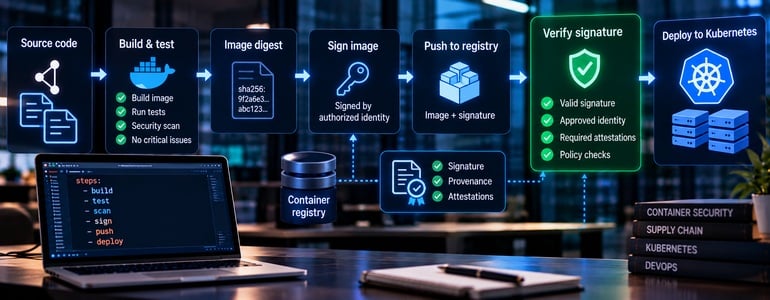
Container image signing should not be viewed as merely a post-build step in the CI/CD process; it represents an integral chain that interlinks many components, including source code, build environments, image registries, signing frameworks, deployment policies, and Kubernetes clusters.
A typical workflow involves the following steps:
- Source code is introduced into the CI/CD pipeline.
- The container image is built and tested.
- Security checks and vulnerability scans are conducted.
- The image digest — a unique identifier for the built image — is generated.
- The resulting artifact is signed.
- The image and its signature are published in the registry.
- Before deployment, the environment verifies the signature.
This entire process is designed not only to enhance security but also to facilitate a more robust software delivery system as detailed in DevOps.com’s software development security blueprint, which emphasizes the importance of artifact signatures along with ephemeral build environments.
Why Image Signing Is Essential in DevOps
While container registries play a crucial role in distributing images, their access controls do not necessarily signify an image's authenticity. An authenticated user could inadvertently or maliciously push a modified image, a compromised CI credential could allow unauthorized artifacts to be uploaded, and tags in configurations may reference unexpected or altered images.
By adding cryptographic signatures, organizations can enforce deployment policies that dictate:
- Only images signed by vetted identities may be deployed in production.
- Development and production signing identities should remain distinct.
- Deployment must carry necessary attestations prior to production.
- Unsigned or improperly signed images must be automatically rejected by the cluster.
This strategic approach enhances trust decisions based on verifiable evidence rather than assumptions about system security.
Understanding What is Signed
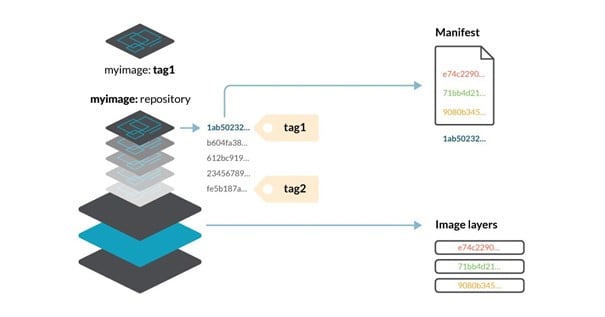
Container images are not static files. They are composed of manifests, configuration data, and file system layers. The manifest defines the image's components, and cryptographic digests provide a secure reference for those components.
Signatures must remain associated with the actual artifact identity. For example, a reference like registry.example.com/payments:production is human-readable but can change. On the other hand, using an immutable digest such as registry.example.com/payments@sha256:abc123 ensures that any change in the underlying image alters its digest, invalidating any previous signatures.
This immutable reference system allows effective signing, as it emphasizes the association between a specific signature and a specific image, enhancing the overall security and trust in automated deployments.
Revisiting the Role of Image Tags
Image tags are useful for management, but relying on them as security identifiers is misguided. Tags can be modified or can point to different images over time. A robust security model requires a clear understanding of the relationship between tags, digests, signatures, and deployment policies. It should emphasize verifying that the requested artifact is indeed the anticipated image with matching digests and validation signatures.
Incorporating Signing in the CI/CD Pipeline
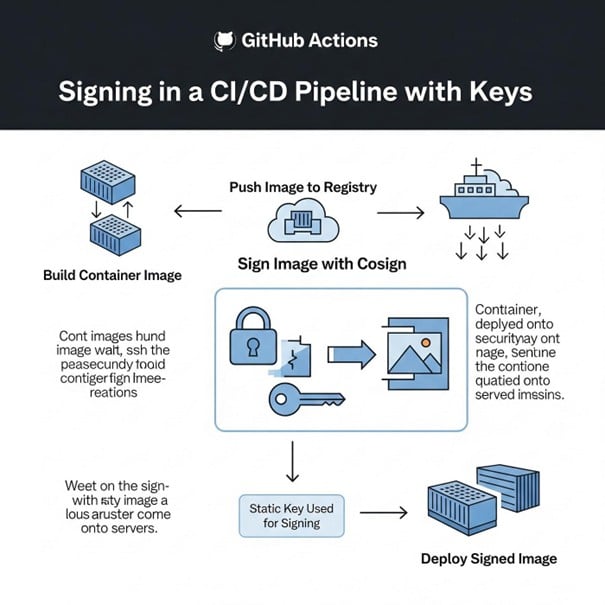
Signing generally takes place after an image is built and validated for distribution readiness, although implementation can vary. Some workflows may publish the image first before signing it, while others may combine the signing step more closely with artifact publication.
Regardless of the order, it is crucial that the signature correlates directly with the artifact intended for deployment. Signing an arbitrary local image disconnected from the registry disrupts this relationship, potentially compromising trust.
Hence, a mature CI pipeline could be summarized as: commit, build, test, security checks, image build, image scan, digest identification, signing, publication, and deployment. The focal point is identifying when the artifact is treated as an approved release candidate for trust.
How Cryptographic Signatures Function
At a high level, a signing system binds an artifact's identity to cryptographic evidence using a signing key. When verification is needed, the corresponding public information can be retrieved to assess the signature's validity.
An essential point is that signing doesn't imply images are hidden; they remain accessible artifacts. Instead, signatures guarantee authenticity and integrity by indicating whether a signed artifact matches the expected identity and whether it has been altered since signing.
However, a valid signature does not ensure that the application is free from vulnerabilities or that it has been correctly authorized to access sensitive production data.
Managing Signing Keys
Traditional signing mechanisms rely heavily on private keys, raising security concerns in CI/CD contexts. If a reusable private key is compromised or misused, any build runner can produce seemingly legitimate artifacts.
To mitigate these risks, organizations should protect long-lived signing keys through dedicated signing services or key management systems (KMS) rather than exposing them in build environments. This model can be particularly beneficial for ephemeral CI runners that exist only for short periods, minimizing the risks associated with permanent signing keys.
Exploring Keyless Signing Solutions
Modern architectures are evolving towards keyless signing, which allows the system to generate signatures linked to identities derived from CI processes or workloads without requiring developers to manage long-lived secrets. This shift not only eases security management but also strengthens the connection between identity and provenance.
This increasing complexity in CI/CD environments necessitates a thorough understanding of machine identities and access control as these components grow over time.
Registry Storage of Signatures
Signatures do not alter the container image itself but exist alongside it within registry structures. When a registry houses an image, it can also store its corresponding manifest, layers, signatures, and additional metadata. This allows for the seamless addition of new evidence without needing to rebuild the image.
Verification During Deployment
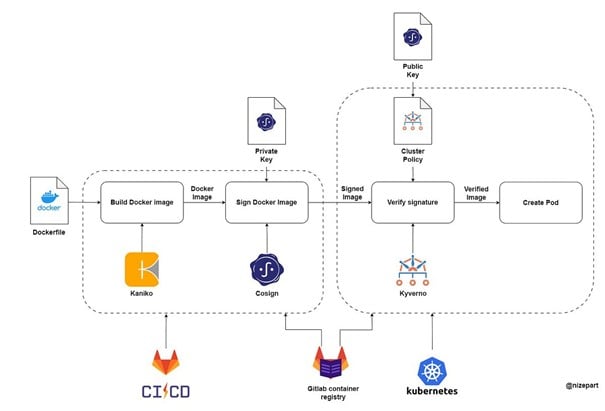
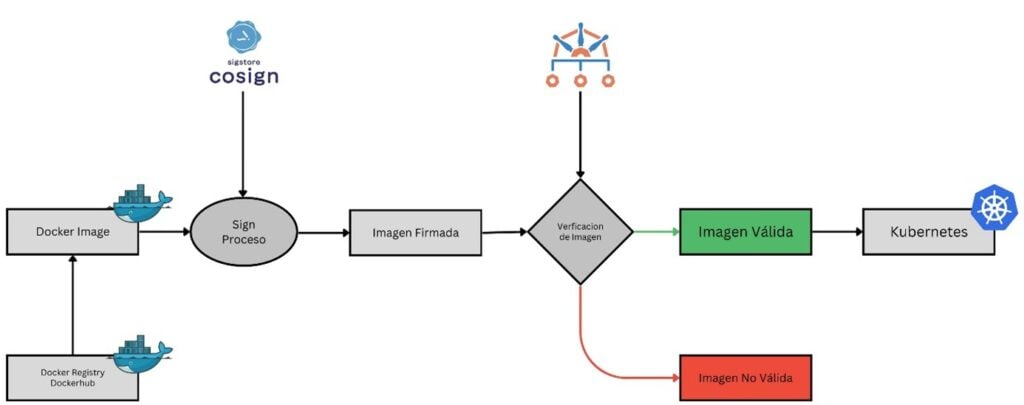
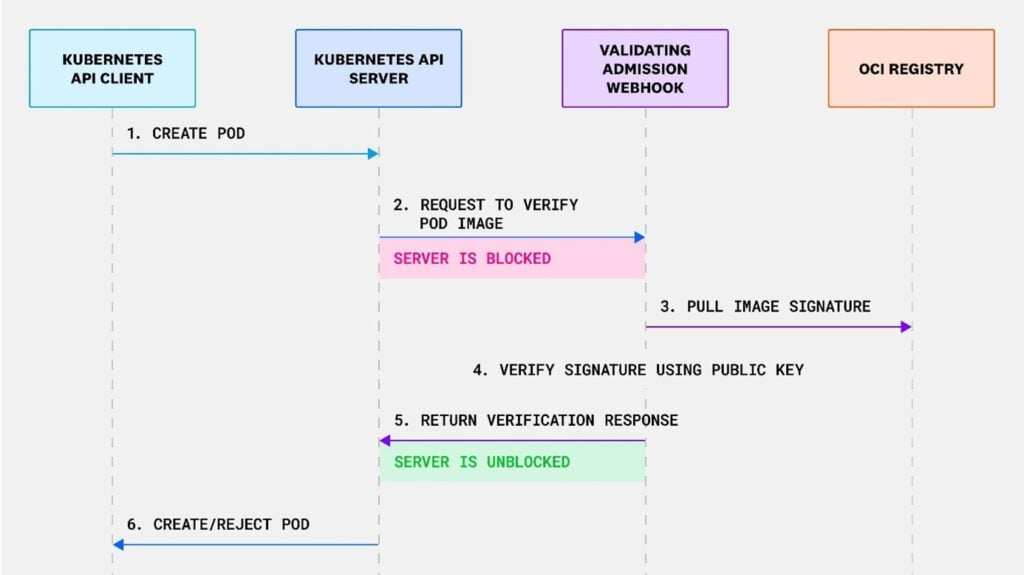
Signing gains its significance from the ability to verify signatures during deployment. The verification sequence entails checking the deployment request, resolving the image reference, retrieving the digest and signatures, and validating the cryptographic details as well as the signer's identity against the deployment policy.
The verification process checks two essential components: the mathematical correspondence of the signature to the artifact and whether the signer is trusted for the corresponding deployment.
Why Kubernetes Admission Matters
Even with pre-deployment verification, varying CI systems or manual deployments can bypass uniform security checks. Kubernetes admission acts as a crucial gatekeeper, ensuring that any request to the Kubernetes API is evaluated against policy checks that can either accept or reject workloads based on signature validity and authorized signers.
This mechanism reinforces the necessity of image signing as a mandatory step in the deployment process. Organizations can enforce that only workloads with valid signatures from approved identities are permitted to enter the cluster.
Evaluating Deployment Policies
Organizations should define a mature signing policy that goes beyond simple checks for signatures. A comprehensive policy might require validated signatures, approved signers, expected repositories, a specific build identity, necessary provenance, appropriate security attestations, and a correct image digest.
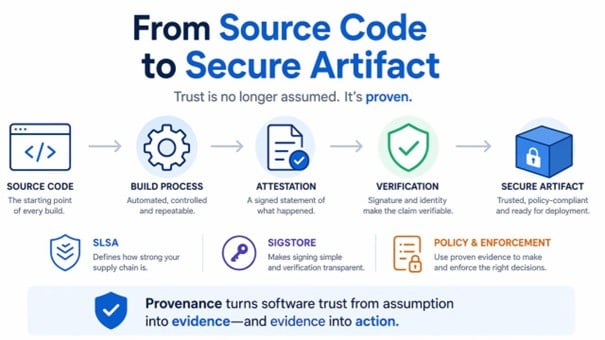
In doing so, the policy formalizes what constitutes a trusted production artifact, encouraging organizations to evaluate each deployment against established definitions of trust.
Differentiating Signing from Vulnerability Scanning
Image signing and vulnerability scanning serve distinct purposes. The former focuses on the authenticity and integrity associated with cryptographic identities and signatures, while the latter analyzes contents for potential vulnerabilities. Thus, a mature DevSecOps pipeline must treat these controls as interconnected but separate mechanisms.
Understanding Signature vs. Attestation
While signatures provide cryptographic evidence about an artifact and its signer, attestations can include further claims regarding how the artifact was built. Organizations may benefit from knowing specifics about the source repository, build environment, test results, and more. This complementary evidence enhances the overall reliability of the signing process.
Implications of a Compromised CI Pipeline
If a CI workflow is compromised prior to signing, it may produce a malicious image that appears to be legitimate if the signing operation occurs afterward. Thus, while a valid signature doesn't indicate a failure of the signing architecture, it reveals vulnerabilities in trust boundaries created through the overall process.
To improve software supply chain security, organizations should interlink artifact signing with provenance and build integrity to elevate the overall trustworthiness of their deployment pipelines.
Addressing the Role of Ephemeral CI Runners
Ephemeral runners can improve overall security by limiting the persistence of credentials, but they do not automatically mitigate compromise risks. It's crucial to define what permissions these temporary environments have access to during builds and deployments. Minimizing privileges ensures scaled-down risk during operations, establishing a safer context for signing operations.
Post-Admission Security Measures
Successfully verifying a signature before Kubernetes admission does not conclude security efforts. Once a workload is accepted, further measures and runtime policies must be enforced—covering aspects like network security, workload identity, secrets management, and resource restrictions. Hence, signing alone does not guarantee that a running application operates securely or behaves as expected.
Building a Comprehensive Trusted Delivery Architecture
The most effective architectures view container image signing as a crucial element within a broader evidence framework. Integrating various components, including source control checks, CI builds, vulnerability assessments, signing, registry management, and Kubernetes admission, creates a more resilient deployment pipeline.
This approach ensures that a range of independent controls contribute to a nuanced understanding of trust in deployed artifacts, allowing sophisticated auditing of the software delivery lifecycle.
The Operational Aspect of Container Signing
Beyond technical mechanisms, organizations must address operational factors surrounding signing, including who manages signing identities, environment segmentation, key rotation policies, and the auditing of signature operations. Clear ownership rules prevent potential conflicts and enhance security across shared infrastructure.
Connecting Signing to Broader Software Supply Chain Security
Container image signing exemplifies the vital processes that ensure an image originates from a trusted source. However, its real potential emerges when it integrates with a comprehensive software supply chain model, enabling the collection of extensive evidence regarding artifact integrity and production.
Ultimately, as organizations progress through their software security evolution, it will become essential to connect artifact signing to provenance, SBOMs, and workload identities to solidify an effective trust framework that governs deployment decisions and artifact evaluations.
In summary, container image signing provides a powerful mechanism for establishing trust in software artifacts. By systematically integrating cryptographic evidence throughout the software delivery pipeline, organizations can foster greater confidence in their deployment processes and mitigate inherent risks.