Phishing Offensive Escalates: Analyzing the Surge of Identity-Based Attacks in Early 2025
| Shelf | AI & ML |
|---|---|
| Date in | |
| Readers | 549 |
Phishing attacks dominate the threat landscape in early 2025, with identity-based intrusions highlighting evolving tactics among cybercriminals.
In the first quarter of 2025, phishing attacks surged to a staggering 50% of all threat engagements, marking a dramatic jump from less than 10% in the previous quarter. This significant rise suggests a strategic shift among threat actors, who are increasingly focusing on identity-based tactics. Notably, the trend indicates a pivot from the previous year's reliance on valid accounts for initial access, which had been the leading method throughout 2024. According to the latest insights from Cisco Talos Incident Response (Talos IR), the use of phishing predominantly as a gateway for deeper network infiltration could require organizations to reconsider their defense approaches.
Phishing as the Key Initial Access Method
This quarter marked the first time phishing attacks eclipsed other methods as the primary means of initial access, primarily leveraging voice phishing (vishing), which accounted for over 60% of these engagements. The shift in tactics from eliciting sensitive data or monetary transactions to establishing persistent access underscores a broader strategy among malicious actors. For instance, during a vishing campaign, attackers successfully deceived users into initiating remote sessions with their workstations, a technique that allowed them to deploy tools and create footholds within enterprise systems.
Notably, some engagements revealed threat actors exploiting phishing to steal legitimate access tokens. For example, in one incident, attackers deployed emails with malicious links, resulting in the theft of a user’s multi-factor authentication (MFA) session token alongside their credentials. With this unauthorized access, they infiltrated the target’s Microsoft Office 365 environment and initiated the installation of additional applications to expand their access. In a separate case, they cloned access tokens after compromising a valid account, running commands to gather system information, and setting up a scheduled task to execute a malicious JavaScript file upon user login. This method of attack illustrates not only a sophisticated understanding of network structures but also a persistent threat to enterprise-level security.
Ransomware Trends: Evolving Tactics of Attackers
Pre-Ransomware Incidents Dominate Engagements
Ransomware and pre-ransomware incidents accounted for over 50% of Talos IR's engagements in Q1 2025, a notable increase from the 30% observed in the previous quarter. A robust campaign utilizing BlackBasta and Cactus TTPs (Tactics, Techniques, and Procedures) was particularly effective, targeting organizations within the manufacturing and construction industries, which corresponded with reported incidents in these sectors. This strategic shift indicates that attackers are adapting their targeting based on industry vulnerabilities and areas of lesser security maturity.
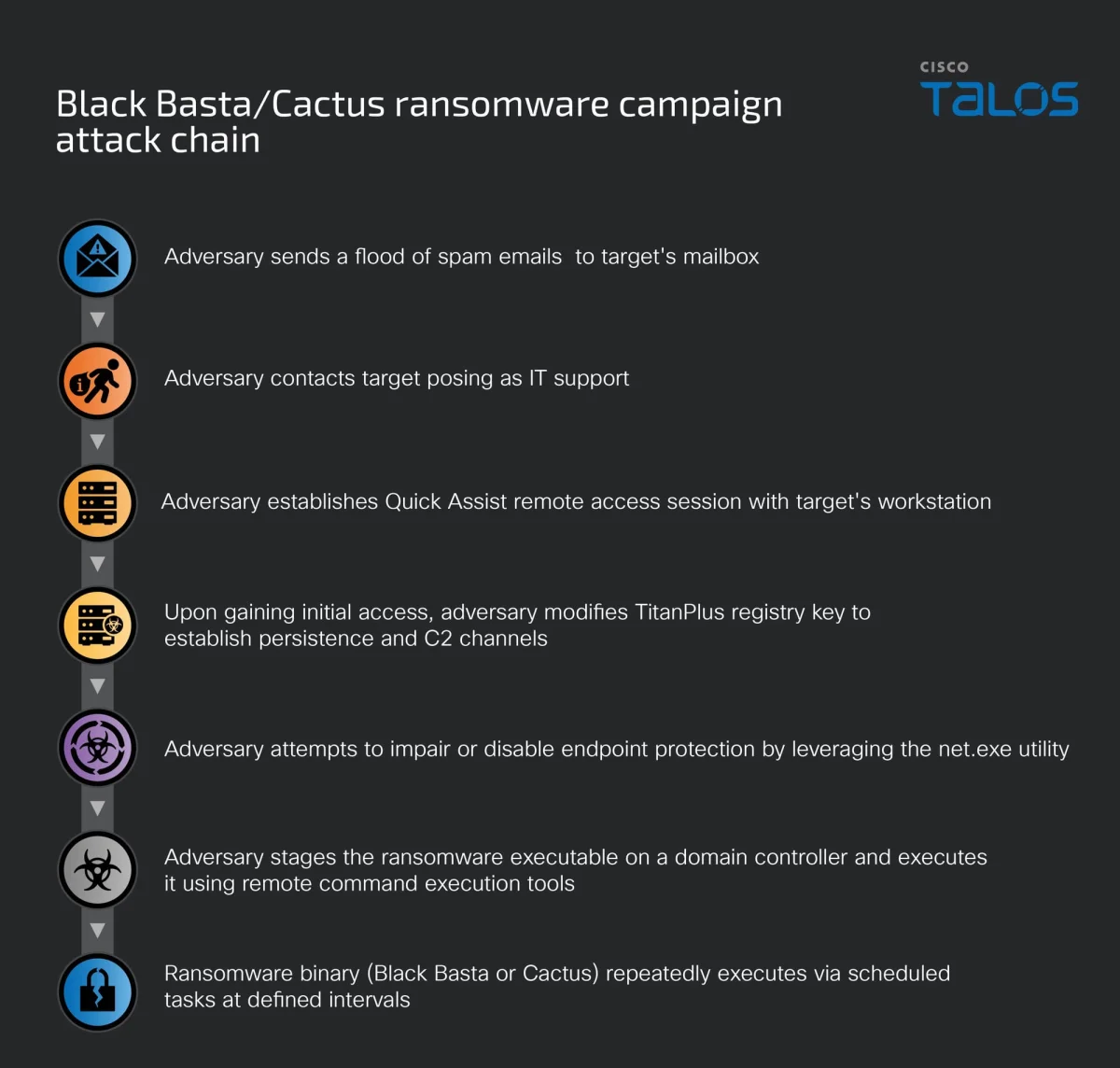
The attack lifecycle began with the inundation of targeted organizations' inboxes with benign spam emails. Following this stage, attackers contacted victims via Microsoft Teams, instructing them to initiate a Microsoft Quick Assist remote access session. Once they established access, they used the TitanPlus registry key to maintain persistence, obfuscating their infrastructure to evade detection. This phase culminated in a series of escalated privileges and lateral movements intended to deploy ransomware. Initially leveraging BlackBasta, attackers pivoted to Cactus ransomware as public detection efforts increased.
The ability of these actors to modify their tactics underscores a troubling trend; they may continue shifting their methods and tools in reaction to corporate defense measures. Talos IR is committed to ongoing surveillance of these actors' operations to detect future modifications in tactics.
Effectiveness of Pre-Ransomware Interventions
Within the ransomware engagements, a striking 75% were identified as pre-ransomware incidents, revealing critical opportunities for intervention. Talos IR emphasized the importance of early engagement with incident response teams as a key defensive strategy. For example, one organization reported a high volume of spam emails consistent with the identified vishing campaign, allowing Talos IR to respond preemptively by providing actionable indicators of compromise (IOCs) and mitigation strategies.
Robust endpoint monitoring solutions emerged as another effective defense against pre-ransomware activities. Instances were reported where monitoring tools flagged unauthorized remote access connections or suspicious file executions, enabling rapid response and containment of the threat. For instance, one organization successfully isolated a compromised system within hours of initial access, demonstrating the value of proactive monitoring and response systems.
Crytox Ransomware Group Emerges
In this period, the rise of the Crytox ransomware group, which utilized HRSword, added a new dimension to the threat landscape. Typically known for encrypting local and network drives, this group exhibited unique tactics by disabling endpoint detection and response (EDR) protections through their operations. A specific case highlighted how they exploited unsecured public-facing applications without MFA for initial access, leading to significant disruptions when they targeted hypervisors hosting virtual machine servers.
Industry Targeting and Engagement Patterns
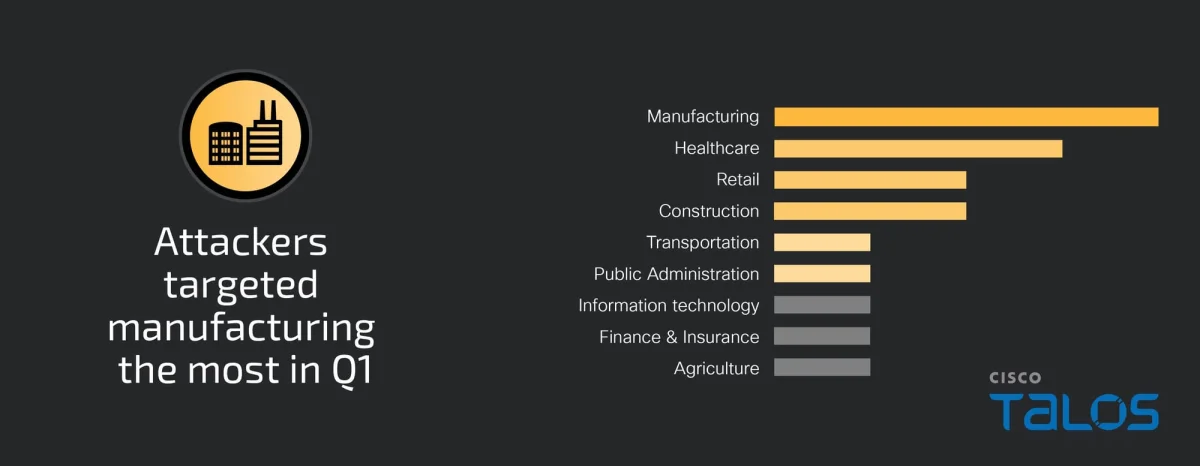
The manufacturing sector was heavily targeted this quarter, making up 25% of the engagements. Strikingly, the education sector that had previously been a primary target saw zero incidents reported in this quarter, indicating a possible shift in threat focus amidst evolving trends in identity-based attacks.
Initial Access Dynamics
Phishing solidified its status as the leading technique for initial access this quarter, further emphasized by the reliance on valid accounts and vulnerability exploitation of public-facing applications. The heightened frequency of phishing attacks correlates with the aggressive vishing campaigns that have emerged within the threat landscape.
Addressing Security Weaknesses: Recommendations
Enhancing MFA and Access Control Protocols
One glaring vulnerability highlighted this quarter is the issues surrounding multi-factor authentication (MFA), which factored into 50% of security incidents. This included misconfigurations, inadequate implementations, and instances of bypassing MFA altogether. The circumvention tactics, notably the theft of token codes, enabled unauthorized network access. Talos IR advises rigorous monitoring for activities like use of bypass codes, unauthorized account creations designed to bypass MFA, and the removal of accounts from MFA management as vital protective measures.
User Education on Phishing Risks
The prevalence of social engineering across half of the engagements indicates a critical gap in user awareness and training. Talos IR recommends intensively reinforcing user education regarding phishing techniques, particularly given the effectiveness encountered during vishing attacks. Education plays a key role in empowering users to recognize phishing attempts and understand the reporting mechanisms for suspicious activity.
Strengthening Endpoint Security
Almost 20% of incidents involved organizations vulnerable to exploitation due to inadequate protection of endpoint security solutions. Talos IR recommends implementing agent-level password protection for EDR solutions and customizing security configurations beyond default settings. Organizations that prioritize these hardening practices stand to mitigate risks posed by threat actors seeking to disable defenders or take advantage of system vulnerabilities.
Notable MITRE ATT&CK Techniques Observed
This quarter's incidents drew attention to several MITRE ATT&CK techniques, with phishing affirmatively rising as the dominant initial access method across various avenues, including vishing, malicious links, attachments, and business email compromise (BEC) strategies. Furthermore, a broader array of both commercial and open source remote access tools was observed, illustrating the adaptive nature of threat actors. These tools accounted for 50% of engagements, an uptick from nearly 40% in the last quarter.
Tactic 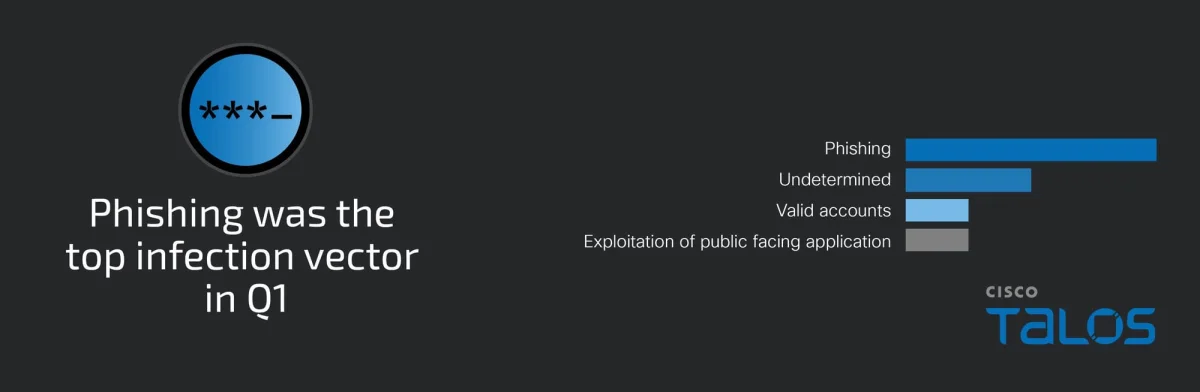 |
Technique |
Example |
Reconnaissance (TA0043) |
T1590 Gather Victim Network Information |
Adversaries gathering information about victim networks for targeting purposes. 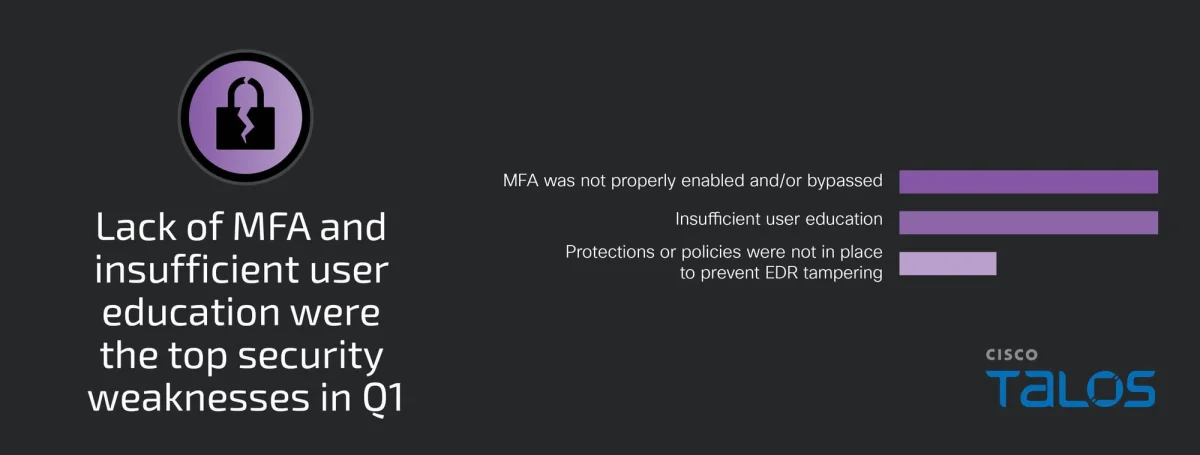 |
Initial Access (TA0001) |
T1598.004 Phishing: Voice |
Users received calls from attackers posing as IT support to initiate access. |
Execution (TA0002) |
T1059.001 Command and Scripting Interpreter: PowerShell |
Attackers abused PowerShell to execute commands during their attack. |
Credential Access (TA0006) |
T1003 OS Credential Dumping |
Adversaries dumping credentials from various sources for lateral movement. |
Impact (TA0040) |
T1486 Data Encrypted for Impact |
Utilizing ransomware to encrypt targeted data. |
As we assess the insights from Q1 2025, it is imperative for organizations to integrate more stringent security measures across the board—from multi-factor authentication to better user education and robust endpoint protections. The evolving nature of cyber threats, particularly those leveraging phishing, necessitates a proactive stance to identify and neutralize potential vulnerabilities before they can be exploited.


