Examining Current Trends in Web Shell Exploitation and Ransomware Tactics from Talos IR Q4 2024 Report
| Shelf | AI & ML |
|---|---|
| Date in | |
| Readers | 945 |
Talos IR's Q4 2024 report reveals a spike in web shell usage for gaining access to public-facing applications and emerging ransomware tactics to monitor.
In Q4 2024, threat actors shifted towards utilizing web shells to exploit public-facing applications, marking a significant transition from earlier reliance on valid account breaches. This quarter saw nearly 35% of incidents involving web shells, a substantial increase from less than 10% in the previous quarter. Cisco Talos Incident Response (Talos IR) observed that this new trend has given adversaries various paths to infiltrate target environments.
Shift in Initial Access Techniques
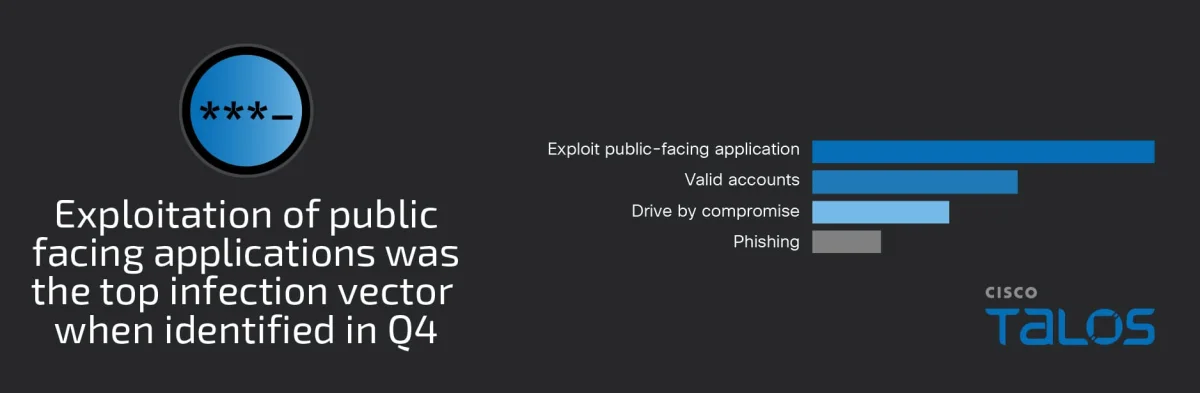
The primary method of gaining initial access changed dramatically; with public-facing application exploitation now accounting for 40% of known access methods, this diverges from the previous trend of using valid accounts. The report indicated that a variety of tools and techniques were employed by attackers during this quarter, notably web shells. In one case, a web shell named “401.php” was uploaded, based on the Neo-regeorg web shell, previously detailed in Talos reports. This is a reminder of the importance of maintaining vigilance against publicly accessible vulnerabilities.
Web Shell Deployment and Post-Compromise Activities
Talos IR reported a growing trend in adversaries deploying open-source web shells as part of their attack toolkit. This marks a diversification of methods used post-compromise. Tools like the Fuzz Faster U Fool web fuzzer were utilized for brute-force attacks against web applications, aimed at uncovering credentials or carrying out reconnaissance.
In certain incidents, older tools like JexBoss, designed to probe Java platforms for vulnerabilities, were repurposed for current attacks. An attacker deployed a malicious web shell saved as "jexws4.jsp" on a vulnerable JBoss server, illustrating that threat actors often revert to familiar tools that can still yield successful outcomes even years after their release.
Ransomware and Extortion Trends
Ransomware incidents made up nearly 30% of the engagements this quarter, slightly down from 40% in the previous quarter. Talos IR identified new ransomware variants, including Interlock, and noted a continued presence of familiar names like BlackBasta and RansomHub. The time from initial compromise to ransomware deployment varied, but most dwell times ranged between 17 to 44 days. This escalation period often allows adversaries to explore the network, gathering sensitive information and establishing further access before executing encryptor binaries.
Remarkably, 75% of ransomware incidents saw operators using compromised accounts to facilitate their attacks, underscoring risks associated with identity-based breaches. Social engineering tactics were particularly evident; for instance, an attacker masqueraded as an IT personnel member to obtain an employee’s credentials, enabling further lateral movement.
In instances involving RansomHub, affiliates deployed a Veeam password stealer targeting backup applications, leveraging previously undocumented techniques. Additionally, actors manipulated Windows Firewall settings for persistent access, potentially laying groundwork for future attacks even after the immediate ransomware threat dissipated.
Remote Access Tools Becoming Ubiquitous
This quarter saw a sharp rise in the usage of remote access tools, which were present in 100% of observed ransomware engagements, compared to just 13% in prior incidents. Tools like Splashtop dominated the landscape, being utilized in three-quarters of the ransomware cases. This trend indicates adversaries are efficiently employing remote capabilities not just for control, but also for lateral movement across compromised networks.
Sector-Specific Targeting
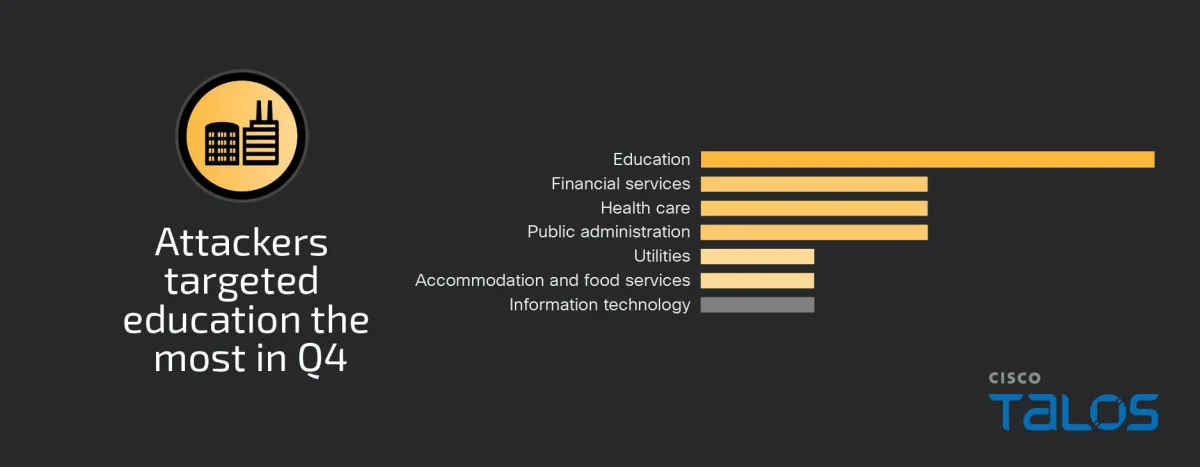
The education sector has become a primary target, with nearly 30% of attacks aimed at organizations within this vertical for the second consecutive quarter. This finding aligns with earlier trends from Q1 2024 and indicates ongoing vulnerabilities in educational institutions.
Addressing Key Vulnerabilities to Protect Against Attacks
To mitigate risks, Talos IR strongly advocates for multi-factor authentication (MFA) across all critical services. Notably, organizations affected by ransomware incidents largely lacked proper MFA configurations, enabling attackers to easily maneuver within networks. Strengthening authentication methods should be paramount, particularly in industries already facing high attack volumes.
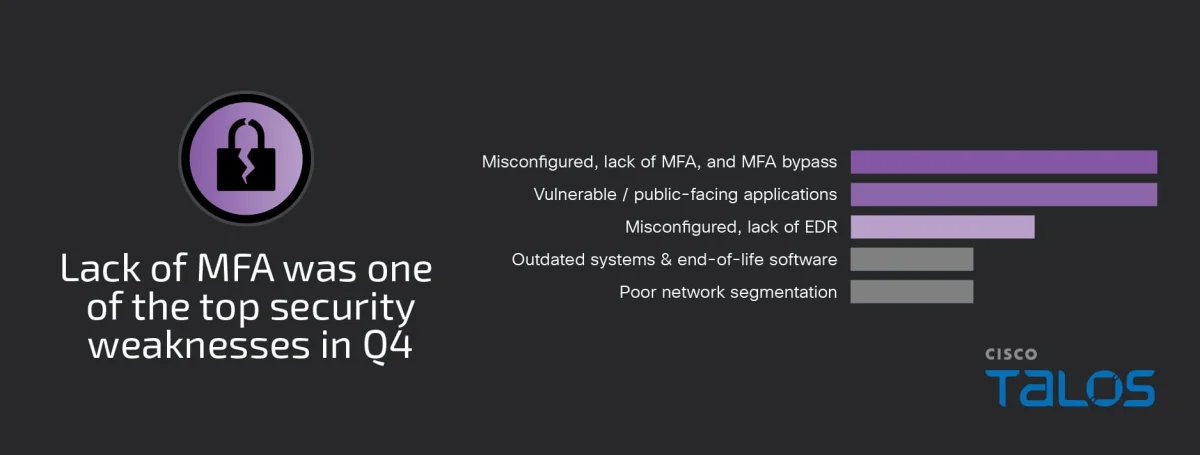
Patching vulnerabilities in software must be a priority; approximately 15% of incidents this quarter involved outdated software. Organizations should aim to ensure their systems are not only updated but are also using currently supported software to limit exposure. Basic measures such as implementing firewalls for network segmentation can further reduce lateral movement capabilities within the organizational network.
Emerging Attack Patterns: Watch for these Indicators
As the year closes, Talos IR reports observing an uptick in password-spraying attacks, particularly against organizations within public administration. The scale of these attempts—including significant volumes of login requests—highlights the critical need for robust password management policies and MFA implementation. Organizations should prepare defenses against such opportunistic and widely adopted attack strategies.
Recommendations for Enhancing Security Posture
Talos IR recommends a multi-faceted approach to cybersecurity that includes:
- Strengthening MFA Implementations: Ensure MFA is enforced for remote access and critical identities; prepare staff through ongoing training against social engineering.
- Patching and Upgrade Protocols: Regularly update and replace end-of-life systems to defend against exploitation due to known vulnerabilities.
- Invest in EDR Solutions: Establish properly configured Endpoint Detection and Response (EDR) technologies or consider outsourcing functions to Managed Extended Detection and Response (XDR) vendors for 24/7 vigilance.
Review of Attacks through MITRE ATT&CK Techniques
The Talos IR report concluded with a comprehensive review of observed techniques mapped to the MITRE ATT&CK framework. Highlights from this analysis included:
- A significant increase in the use of remote access tools, with a notable jump from 5% to nearly 40% compared to the last quarter.
- A clear departure from valid account compromises as the primary vector for initial access, now overtaken by the exploitation of public-facing applications.
Conclusion: Vigilance and Preparedness are Key
As cyber threats evolve, the findings from this quarter underline crucial shifts in attacker tactics. Monitoring web shell deployments, improving network security hygiene, and implementing strategic defenses such as EDR and MFA are paramount for organizations aiming to safeguard against increasingly sophisticated cyber threats.
Firms should not only adopt these recommendations but also continuously assess their security frameworks to adapt to new attack methodologies that are likely to emerge in the coming year.


